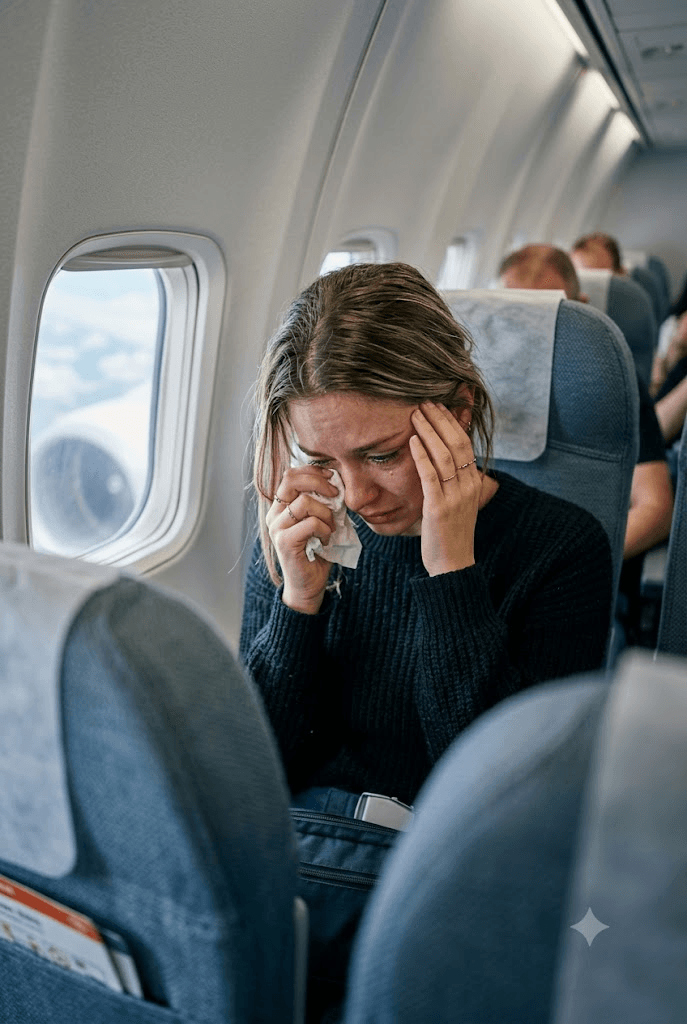
The moment you find out your partner had a six-month affair, the world stops. Not in a cinematic, slow-motion kind of way — but in a cold, fluorescent-lit, this-can’t-be-real way. You may have suspected something was off for weeks. Or maybe it came completely out of nowhere, a text on a phone left unlocked, a credit card statement that didn’t add up. However it happened, you’re now standing at one of the most painful crossroads a person can face: do you stay, or do you go?
There is no universal right answer. But what I can tell you — from the research, from the stories of women who have lived it, and from honest reflection — is that a marriage can survive a six-month affair. It won’t look the same. The version of your marriage that existed before is gone. What you’re building now, if you choose to stay, is something new. Something that, for some couples, ends up being stronger and more honest than what came before. For others, staying reveals that the relationship was already over. Both outcomes are valid. What matters is that you go in with your eyes open.
Why Six Months Changes Everything
Not all affairs are the same, and the length of one matters enormously. A one-night lapse driven by alcohol and poor judgment is devastating — but a six-month affair is a sustained decision. Over six months, your partner chose, repeatedly and consistently, to deceive you. That means there were hundreds of small moments where they could have stopped, told the truth, or ended it. They didn’t. That reality is something you’ll need to reckon with, not to punish your partner forever, but to understand the depth of the work ahead.
A long affair often involves emotional intimacy, not just physical. Your partner may have shared private parts of themselves — their fears, their dreams, even complaints about your relationship — with someone else. That secondary betrayal, the emotional one, can actually hurt more than the physical component. If you’re going to rebuild, you both need to understand what needs were being met in that relationship and why they weren’t being addressed with you.
7 Real Truths About Healing After Cheating
1. You will grieve the marriage you thought you had. Before you can rebuild anything, you have to mourn what was lost — not just the fidelity, but your sense of safety, your version of history, your trust in your own instincts. Give yourself full permission to grieve this without rushing to “fix” it.
2. Forgiveness is not the same as reconciliation. You can forgive your partner — meaning you release the poison of resentment for your own sake — without choosing to stay. And you can choose to stay without having fully forgiven yet. These are separate processes running on different timelines.
3. Your partner’s willingness to be transparent is everything. Rebuilding trust requires radical openness, not just promises. That means access to devices if you ask for it, honest answers to hard questions, ending all contact with the affair partner, and consistent follow-through over months and years — not weeks.
4. Couples therapy is not optional — it’s necessary. You cannot rebuild from an affair like this through willpower and love alone. A trained therapist who specialises in infidelity will guide you through disclosures, rebuilding emotional safety, and addressing the underlying issues in ways that a self-help book simply can’t replicate.
5. The timeline is longer than you think. Research from infidelity experts suggests that the average recovery timeline for full trust restoration after a major affair is two to four years — not two to four months. If you’re three months in and it still feels impossible, that doesn’t mean you’re failing. It means you’re healing on a normal schedule.
6. Your body will react even when your mind is trying to move on. Hypervigilance, anxiety, intrusive thoughts, nausea when your partner is late — these are trauma responses. Affair discovery is a genuine trauma. Working with an individual therapist alongside couples therapy can help you process the PTSD-like symptoms that often accompany betrayal.
7. You are allowed to change your mind. Deciding to try doesn’t mean you’ve locked yourself in. Some couples commit to a 90-day “experiment” of working on the marriage before making any permanent decisions. If, after genuine effort, you discover that staying is not what you want, that is a valid and courageous conclusion.
What Research Says About Couples Who Survive Infidelity
A 2017 study published in the Journal of Marital and Family Therapy found that approximately 53% of couples affected by infidelity chose to stay together, and of those, a significant portion reported relationship satisfaction comparable to or better than couples who had never experienced infidelity — after two or more years of dedicated work. The keyword there is dedicated. Couples who reported improvement shared several things in common: both partners were committed to the process, the unfaithful partner took genuine accountability (not just apology), and the couple engaged in some form of professional support.
What the research does not support is the idea that love alone is enough to recover from a sustained affair. Emotional investment without structural change — new communication patterns, better conflict resolution, addressed unmet needs — tends to result in repeat infidelity or slow emotional withdrawal.
The Role of Individual Healing in Marriage Recovery
One of the most underestimated parts of surviving an affair is the work you need to do as the betrayed partner — not because any of this is your fault, but because you deserve to process this fully in your own space. Individual therapy gives you room to explore questions that are too raw to raise in a joint session: Do I actually want this marriage, or am I staying out of fear? Do I still respect my partner? Can I picture a future with them that feels good, not just familiar?
If you have children, the pressure to stay “for the kids” can cloud everything. But children benefit most from watching two parents who handle conflict, pain, and uncertainty with honesty and dignity — whether that means staying together or separating respectfully. What harms children is sustained unresolved conflict and emotional dishonesty in the home, not the structure of the family unit itself.
You might also find that the women around you have very strong opinions about what you should do. Some will tell you to leave immediately. Others will tell you that every marriage deserves a second chance. The truth is that only you know the full texture of your relationship, your history, and your needs. The most important opinion in the room is yours.
If you’re trying to make sense of where your relationship stands right now, reading about the rule of three red flags and when to walk away can help you clarify your own limits — not as a reason to leave, but as a framework for understanding your non-negotiables.
Frequently Asked Questions
How long does it realistically take to heal from a partner’s affair?
There is no fixed timeline, but most infidelity therapists suggest that genuine healing — not just surface-level peace, but restored trust and emotional intimacy — takes between two and four years when both partners are actively working on it. You will likely have good months and then a hard week that feels like you’re back at square one. That is normal, not a sign of failure. Progress in this kind of recovery is not linear.
Should I tell people in my life about the affair?
This is deeply personal, and there’s no right answer. Confiding in one or two trusted people can be important for your own support and sanity. However, sharing widely creates a social record that is very hard to undo — especially if you do choose to reconcile. People form permanent opinions about your partner that you can’t un-ring. A good rule of thumb: tell people who will support you, not people who will make the decision for you or who will carry resentment toward your partner indefinitely.
Further Reading & Sources
You Might Also Like
- The Rule of Three Red Flags: When to Walk Away
- The High-Stakes Dating Market
- The Psychology of Social Control

Cassandra Simpson is a wellbeing and relationship writer with a BSc in Psychology and five years of experience working in community mental health support. She writes about love, friendship, boundaries, and the emotional work of belonging — drawing on both academic grounding and the hard-won perspective that comes from navigating her own relationship patterns, friendships, and personal growth in real time. Cassandra trained as a peer support facilitator and has spent years exploring attachment theory, interpersonal dynamics, and the psychology of connection. Her writing is shaped by a deep belief that most relationship struggles come not from failure, but from the absence of honest, accessible information about how human connection actually works.
Further Reading