How to Reclaim Your Brain’s Reward System
The encouraging news is that the brain’s dopamine system is plastic — it can be recalibrated. The process is not comfortable, but it is not mysterious either. The mechanism is simple: introduce delay. Every time you sit with a craving for a few minutes before acting on it, you are building the tolerance and the neural pathways that make real-world reward more accessible. Dopamine fasting — periods of intentional abstinence from high-stimulation activities — has been popularised in wellness culture with varying degrees of rigour, but the underlying principle is sound: when you lower the stimulus floor, ordinary life becomes more satisfying.
This doesn’t require extreme measures. Start with one hour of phone-free time per day — not scrolling, not checking, not available. Use that hour for something that requires sustained attention and provides delayed reward: reading, cooking, a walk without earbuds, a conversation. Your brain will be uncomfortable for the first few days. This is the dopamine system recalibrating. Sit with it.
The long-term payoff is not just reduced social media use — it is restored capacity for boredom, which is actually the precursor to creativity and insight. The ability to sit quietly with your own thoughts without reaching for stimulation is one of the most underrated cognitive skills of our time, and one of the most systematically trained out of us by the attention economy.
Sleep, Dopamine, and the Cycle You Might Not Know You’re In
One of the most underappreciated links in this system is the relationship between dopamine and sleep. Social media use — particularly in the hour before bed — suppresses melatonin through blue light exposure, but the dopamine effect may be even more significant. Late-night scrolling keeps the reward system in a state of anticipatory activation that is physiologically incompatible with the calm needed for deep sleep. Poor sleep then depletes dopamine receptors, making you more susceptible to seeking stimulation the following day. This is not a metaphor — it is a documented neurological cycle.
Breaking the cycle typically requires addressing both ends: reducing evening screen use, and improving sleep quality. Even modest improvements in sleep — an extra 45 minutes of deep sleep — produce measurable improvements in mood, impulse control, and the ability to resist the pull of immediate reward. If you’re interested in the neuroscience of this in more depth, the post on why six hours of sleep is never enough covers exactly what happens to brain function under sleep deprivation.
Frequently Asked Questions
Is social media addiction a real clinical condition?
The term “addiction” in the clinical sense requires specific criteria including loss of control, significant life impairment, and failed attempts to stop. By these criteria, some people do meet the threshold for what researchers call “problematic social media use,” which shares neurological features with other behavioural addictions. However, most people who feel compelled to check their phones are experiencing a strong habit with dopaminergic reinforcement — uncomfortable and potentially harmful, but not clinical addiction. The distinction matters because the interventions differ: problematic use benefits from cognitive behavioural approaches, while strong habits respond to environmental design changes.
Can I use social media without it affecting my mental health?
Yes — but the research suggests that this requires intentional, active use rather than passive scrolling. Actively using social media to connect with specific people, create content, or engage in communities around genuine interests is consistently associated with better outcomes than passive consumption of a feed. The key variable is agency: when you are making deliberate choices about what you’re doing and why, the neurological impact is fundamentally different from the automated, reflexive scroll that the platforms are designed to facilitate. Creating a feed that aligns with your values — unfollowing accounts that produce envy or comparison, muting content that escalates anxiety — is not just preference management. It is a legitimate mental health intervention.
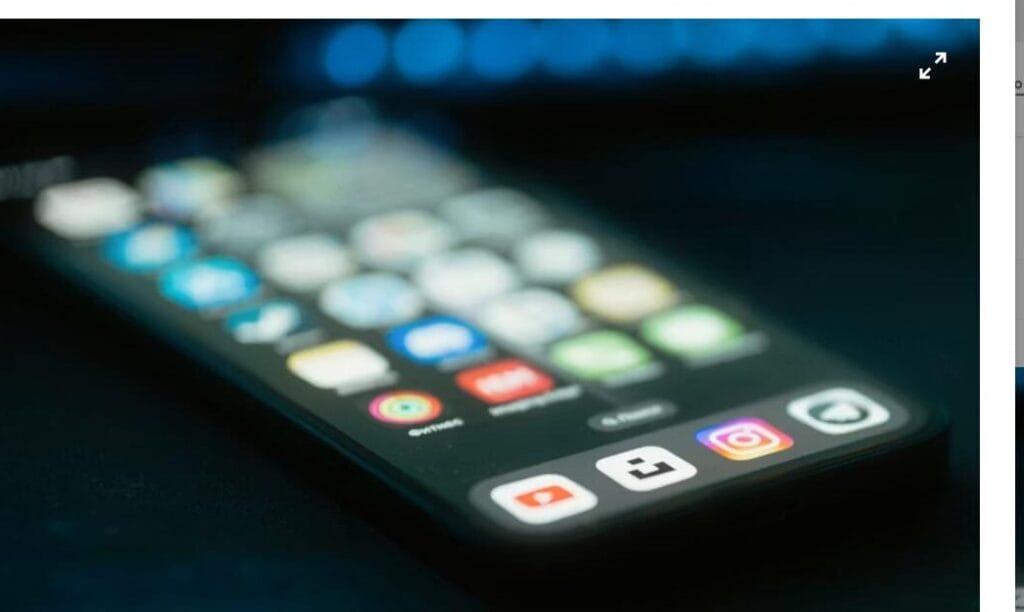
I used to scroll Instagram before bed — just for “five minutes.” An hour later, I’d still be lying in the dark, heart racing, wondering why I couldn’t stop. It wasn’t laziness or boredom. It was dopamine — and social media platforms are engineered to exploit it.
Understanding how your brain’s reward system works — and how apps hijack it — is one of the most important things you can do for your mental health right now.
What Is Dopamine, Really?
Dopamine is a neurotransmitter often called the “feel-good chemical,” but that’s a simplification. It’s actually the anticipation chemical — it surges when you expect a reward, not necessarily when you receive one. (Psychology Today)
This is exactly what makes social media so hard to put down. Every scroll is a mini slot machine — you don’t know if the next post will be interesting, funny, or heartbreaking. That unpredictability keeps dopamine firing constantly.
7 Ways Social Media Exploits Your Dopamine System
1. Variable Reward Schedules
Slot machines are so addictive because the reward is unpredictable. Social media works identically — sometimes you get 3 likes, sometimes 300. This variable reward schedule is the most powerful driver of compulsive behaviour known to psychology. (National Institutes of Health, 2020)
2. Infinite Scrolling Was Designed to Keep You Captive
Aza Raskin, the creator of infinite scroll, has publicly apologised for the feature, estimating it wastes 200,000 collective human hours per day. There’s no natural stopping point — your brain never gets the signal that you’re “done.” (BBC, 2018)
3. Notifications Are Tiny Dopamine Hits
Every notification — a like, a comment, a new follower — triggers a small dopamine release. Over time, your brain begins to crave these hits. Researchers have found that even seeing a notification icon activates reward circuits. (Frontiers in Psychiatry, 2020)
4. Social Validation Feels Like Survival
Humans evolved as social creatures — belonging to a group was literally life or death. Likes and comments tap into ancient brain circuitry that equates social approval with safety. When a post performs well, it feels profound. When it flops, it can genuinely hurt. (Psychology Today, 2020)
5. Comparison Triggers Dopamine Deficiency
Seeing curated highlight reels makes your own life seem lacking. This comparison doesn’t just make you feel bad — it actually depletes dopamine by raising your reward baseline. What used to satisfy you no longer does. (Computers in Human Behavior, 2020)
6. Autoplay Removes Your Decision-Making
Netflix, YouTube, TikTok — all use autoplay to eliminate the moment of conscious choice that might make you stop. By the time the next video starts, your dopamine system has already committed. You didn’t choose to keep watching. Your neurology did.
7. Your Dopamine Tolerance Increases Over Time
Just like with any addictive substance, your brain adapts. The same content that once excited you becomes boring. You need more stimulation, more novelty, more scrolling to get the same hit. This is why social media use tends to escalate. (NIH, 2021)
What This Does to Your Brain Long-Term
Chronic overstimulation of the dopamine system reshapes the brain itself. Studies show heavy social media use is linked to reduced attention spans, higher anxiety, lower impulse control, and diminished ability to enjoy real-life experiences. This is called dopamine dysregulation — your reward system no longer functions optimally without artificial stimulation. (The Guardian, 2018)
How to Reset Your Dopamine System
- Turn off all non-essential notifications. Remove the constant dopamine interruptions.
- Set app time limits. Most phones allow daily caps — use them.
- Create phone-free zones. Bedroom, mealtimes, and mornings should be sacred.
- Replace scrolling with real-world dopamine sources. Exercise, creativity, nature, and deep conversation all stimulate dopamine without the crash.
- Try a dopamine fast. Even 24-48 hours away from social media can meaningfully reset your baseline. (Healthline, 2023)
Final Thought
Social media isn’t evil — but it is designed by some of the world’s smartest engineers to maximise the time you spend on it, not to maximise your wellbeing. Knowing how your dopamine system works is the first step to taking back control.
You deserve a dopamine system that works for you — not one that’s been quietly rewired without your consent.
Love Gracie xoxo
Related Articles:
- Think You Can Multitask? Science Says You’re Doing Everything at 60%
- 6 Mindful Exercises to Enhance Your Morning Walk Experience
- 10 Habits to Eliminate if You Can’t Remember the Last Time You Felt Joy

Gracie Webb is a writer and researcher with a first-class degree in Psychology and over seven years of experience studying behavioural change, self-development, and the science of decision-making. She worked for four years as a research assistant in a cognitive behavioural therapy clinical setting, where she observed first-hand the gap between what people know they should do and what they actually do — a gap that sits at the centre of nearly all her writing. Gracie’s personal journey through a toxic long-term relationship, the slow process of rebuilding her self-worth, and the year she spent in therapy gave her both the intellectual framework and the personal authority to write about growth with honesty. Her work is rigorous, compassionate, and consistently aimed at the reader who is genuinely trying to change.
Further Reading