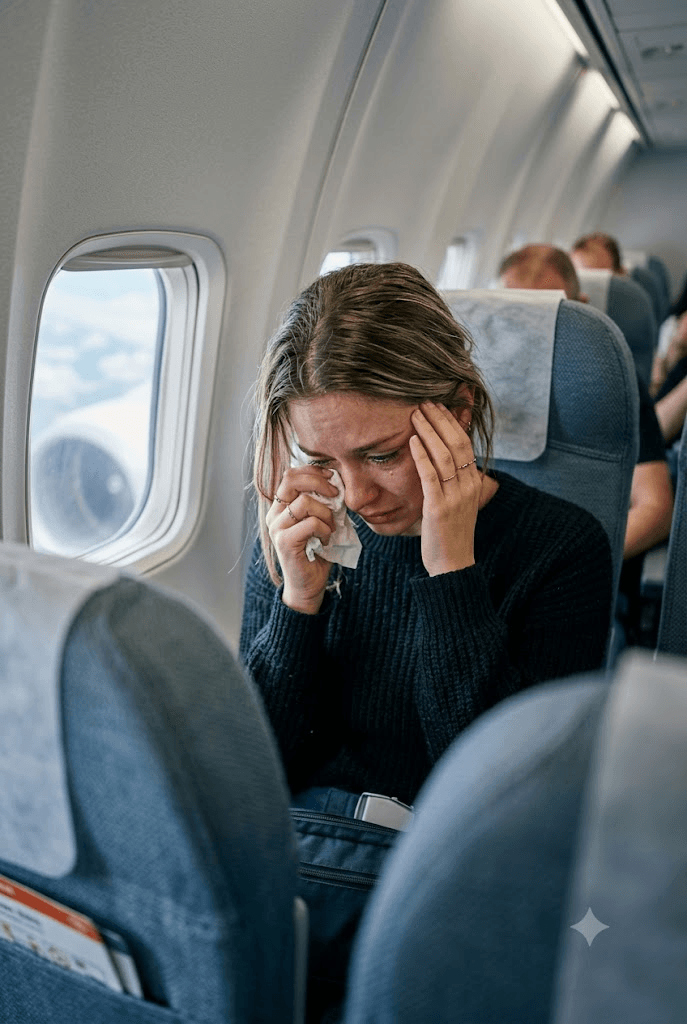
I want to be careful with this piece, because it’s personal in a way that requires more care than the usual. It’s the story — not just my story, but a story I’ve heard in various forms from enough people to believe it’s recognisable — of moving from one kind of love to another. From relationships defined by tension, difficulty, and a particular kind of intensity that felt like aliveness, towards something quieter, softer, and ultimately more real. This is a story of recovering from toxic men and choosing a completely different path.
I’ll call it what it is: a story about finally being ready to be treated well. And how much work that readiness required.
The Attraction to Toxic Men
For years, I was drawn to toxic men who were complicated. Not in the interesting, internally-complex way — in the emotionally unavailable, will-he-won’t-he, I-never-quite-know-where-I-stand way. And I told myself it was because I found certainty boring. Because easy love felt flat. Because the electricity of uncertainty was just the natural texture of real feeling.
What I know now — having done enough therapy and honest reflection to actually see it — is that the electricity was anxiety, not attraction. The uncertainty wasn’t exciting; it was familiar. The relationships were activating my attachment system in the specific way that people with anxious attachment find both unbearable and compulsive: the push-pull that feels like passion and is actually dysregulation.
Amir Levine and Rachel Heller, whose research on attachment styles is synthesised in the book Attached, describe anxious-avoidant pairings as among the most common and most reliably painful attachment dynamics. The anxious person is continuously activated; the avoidant person is continuously retreating. The intensity this creates is real. So is the suffering. Recognising self-sabotage in relationships begins with seeing these dynamics clearly.
The Decision to Stop Choosing Toxic Men
The decision didn’t arrive dramatically. It arrived in a particularly tired moment after a particularly pointless argument — the kind you have with someone who won’t actually argue with you, who just withdraws until you feel so anxious you’ll say anything to reconnect. I remember thinking: I am so tired of this. Not of him specifically. Of this version of love. Of the particular shape of this particular suffering.
What came next was genuinely useful work, not a quick fix. Therapy. Real examination of what I’d been choosing and why. Learning to sit with the discomfort of a different kind of relationship — secure attachment, which felt too quiet, too certain, almost boring — long enough to discover that what I’d mistaken for flatness was actually safety.
Finding Love Beyond Toxic Men
I found it, eventually, with a woman. I won’t claim the gender is the point — I’ve since spoken with heterosexual women who found the same quality of love with men. The point was the quality: warmth without performance, consistency without the anxious monitoring of whether it was still there, genuine mutual care.
What was different was the absence of the activation. There was no push-pull. No uncertainty used as a relationship dynamic. Just — she was there, I was there, we were honest with each other, we were kind. It took me an embarrassingly long time to stop waiting for the other shoe to drop. To trust that the steadiness was real rather than the pause before the usual turbulence.
What this kind of relationship asks of you is different from what a difficult relationship asks. It asks you to be present, to be honest, to receive care rather than just survive it. It asks you to believe — viscerally, not just intellectually — that you’re worth being treated well. That belief doesn’t come automatically. It has to be built, usually from the inside out, usually with help.
Healing After Toxic Men: What It Required
It required, more than anything, honest self-examination. Not self-blame — not “why do I keep choosing the wrong people?” as a stick to beat myself with — but genuine curiosity about the pattern. What was I getting from the difficult relationships? What did I believe about myself that made those relationships feel like the level I deserved?
It required understanding that knowing when to leave is itself a form of self-knowledge. And that rebuilding yourself after leaving is not just possible but genuinely one of the most important things you can do. The version of you that comes through that process — clearer about what you deserve, less tolerant of dynamics that diminish you, more capable of receiving what’s actually good — is worth becoming.
Frequently Asked Questions
Is it always about childhood attachment?
Not exclusively — but early attachment experiences are among the most powerful shapers of adult relationship patterns. Attachment theory doesn’t predict a fixed destiny; it describes tendencies that were adaptive once and may have become limitations. Understanding your attachment style is useful not as a label but as a map of your particular relationship landscape.
Can you genuinely change your attachment style?
Research suggests yes — particularly through “earned security,” the process of developing secure attachment through consistent, positive relationship experiences, whether romantic or therapeutic. Therapy with an attachment-informed clinician is among the most reliable routes. Consistently secure relationships also help, over time, to rewire the nervous system’s expectations.
What if “easier” love genuinely doesn’t feel as alive?
The flatness is real in the early stages, because your nervous system is calibrated to the activation of anxious attachment. What was labelled “excitement” was partly adrenaline. A genuinely secure relationship will feel quieter initially — and that quietness will gradually come to feel like peace rather than lack. The aliveness is still there. It’s just made of different ingredients.
What Leaving Toxic Men Teaches You
Dr. Sue Johnson’s research on adult attachment consistently shows that beneath the patterns of conflict and avoidance in struggling relationships, there is almost always a core question: “Are you there for me? Can I count on you?” Learning to ask that question directly — and to choose partners who can answer it honestly — is one of the most important things any of us can do for our love lives.
If you’re also working on your sense of self through this transition, reconnecting with your own worth is essential. And understanding why going back to a toxic ex hurts you can help solidify the decision to move forward, even on the hardest days.
Further Reading & Sources
- APA: Healthy Relationships
- Psychology Today: Relationships
- PubMed: Relationships & Well-being Research

Arlyn Parker is a wellness and mindfulness writer with a background in holistic health coaching. She completed her practitioner training in mindfulness-based stress reduction (MBSR) and holds a certification in positive psychology from an accredited UK provider. Over six years of working with clients navigating anxiety, burnout, and major life transitions gave Arlyn a front-row seat to what actually helps people create sustainable calm — and what doesn’t. Her own experience with burnout in her late 20s, and the slow, deliberate process of rebuilding her health and habits, is the foundation of everything she writes. Arlyn’s work is not about aspirational wellness — it’s about practical, evidence-informed strategies for people living real, complicated lives.