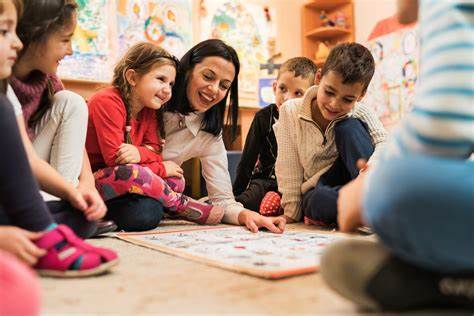

When it comes to daycare, many parents assume that simply sending their child to a group setting will automatically lead to improved social skills. However, research and insights into early childhood development suggest that the reality is more complex. While daycare does offer opportunities for interaction, socialization, especially in younger children, may not happen as easily or quickly as many expect. Here’s what you need to know about socialization in daycare, particularly for children under 3 years old.
1. Socialization in Daycare is Not Automatic
While daycare provides opportunities for children to interact with others, it doesn’t guarantee they will develop social skills. For children under 3, socialization may not occur as expected.
2. Parallel Play is Common for Toddlers
Children under the age of 3 often engage in parallel play, where they play next to, but not with, other children. This is a natural stage of development, not cooperative play or shared activities.
3. True Socialization Develops Later
Skills like sharing, taking turns, and empathy usually don’t emerge until around age 4. Younger children are still learning basic concepts like possession and boundaries.
4. Daycare Provides Exposure, Not Instruction
While daycare exposes children to other kids, it doesn’t necessarily teach them how to interact meaningfully. Social skills are often developed with active guidance from caregivers.
5. Caregivers Can Influence Socialization
Caregivers play a key role in helping children develop social skills by modeling behaviors such as sharing, communication, and conflict resolution.
6. Parental Involvement is Crucial
Parents contribute significantly to a child’s socialization by offering opportunities for social interaction outside of daycare, such as playdates and family activities.
7. Daycare Alone Is Not Enough Simply being around other children in a daycare setting doesn’t guarantee socialization. For true social development, children need intentional support and opportunities for interaction both at home and in other settings.
8. Socialization is a Gradual Process
Social skills develop over time, and the process can vary depending on the child’s age and developmental stage. It’s not something that happens quickly or automatically in daycare.
Conclusion: Socialization Takes Time and Support While daycare does provide valuable social exposure, especially for older children, it should not be seen as a one-stop solution for developing social skills, particularly for younger children. True socialization is a gradual process, and it requires intentional guidance, patience, and appropriate opportunities for interaction. Parents play an essential role in supplementing daycare experiences with additional social activities and emotional support. Understanding that socialization is a long-term process will help set realistic expectations and allow children to develop social skills at their own pace.
Love Arlyn
Related Articles:
7 Self-Care Tips for Busy Women: How to Prioritize Yourself
5 Essential Lessons for Solo Traveling at 40
Lessons in Well-Being: 8 Insightful Lessons from 40 Years of Life Experience
Making an Informed Decision for Your Family
The decision about childcare is one of the most personal and contextual a parent makes — and rarely as binary as the cultural conversation suggests. Quality of care, individual child temperament, family circumstances, and the wellbeing of the parent all belong in the equation. Research consistently shows that what matters most isn’t the specific setting but the quality of relationships within it: sensitive, responsive caregivers who are attuned to each child’s needs produce good outcomes in any context. Trust your knowledge of your child, ask questions about the specific setting you’re considering, and give yourself permission to make a decision that works for your family’s reality rather than an ideal. For more on navigating the early years of parenthood, What No One Tells You About the First Year of Motherhood is an honest and compassionate companion.
Written by Arlyn Parker, Wellness Writer at Rubie Rubie.
You Might Also Like
- What No One Tells You About the First Year of Motherhood
- Raising Confident Children: What Science Says Actually Works

Arlyn Parker is a wellness and mindfulness writer with a background in holistic health coaching. She completed her practitioner training in mindfulness-based stress reduction (MBSR) and holds a certification in positive psychology from an accredited UK provider. Over six years of working with clients navigating anxiety, burnout, and major life transitions gave Arlyn a front-row seat to what actually helps people create sustainable calm — and what doesn’t. Her own experience with burnout in her late 20s, and the slow, deliberate process of rebuilding her health and habits, is the foundation of everything she writes. Arlyn’s work is not about aspirational wellness — it’s about practical, evidence-informed strategies for people living real, complicated lives.