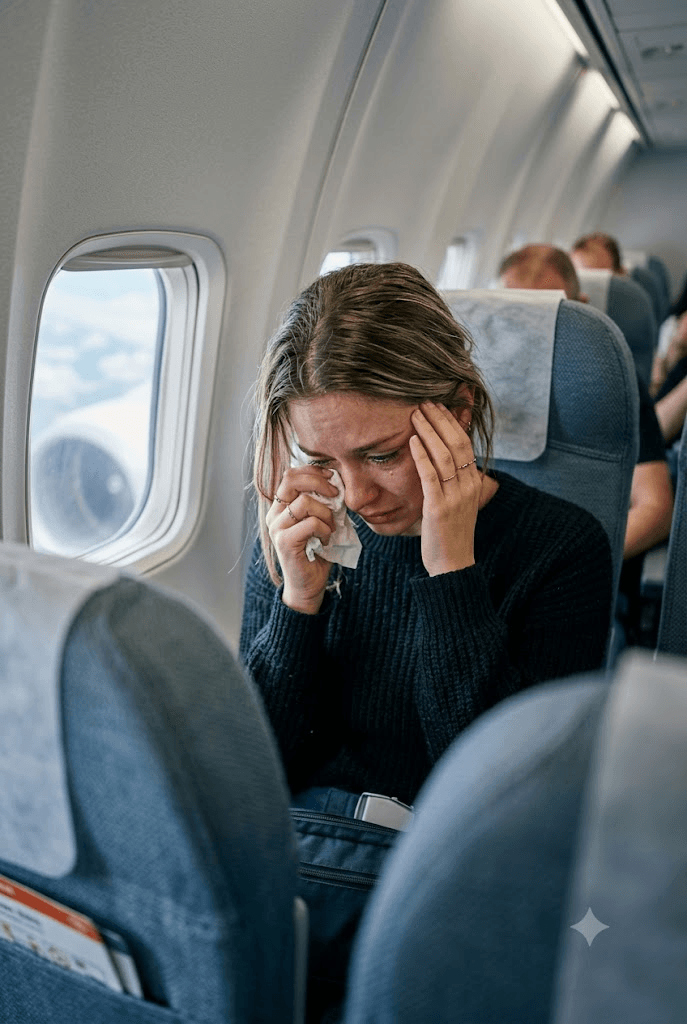
When the Relationship You’re In Starts to Feel Like the Problem
There is a particular kind of confusion that comes with recognising the signs of a toxic relationship. It is not the clean, sharp clarity of knowing something is wrong. It is a fog — a persistent, disorienting haze that makes you second-guess your own perception, question your own memory, and wonder, quietly and often, whether the problem might actually be you.
That confusion is not accidental. It is, in many cases, by design. And understanding why toxic relationships are so difficult to identify — and even more difficult to leave — is the first step toward doing something about it.
What Actually Makes a Relationship Toxic
The signs of a toxic relationship include patterns of sustained harm. A toxic relationship is not simply one where people argue. All relationships involve conflict. What distinguishes a toxic dynamic is the pattern — the recurring, sustained erosion of one partner’s wellbeing, autonomy, or sense of self. According to research published by the American Psychological Association, toxic relationship patterns are associated with elevated cortisol levels, disrupted sleep, anxiety, and depression — effects that can persist long after the relationship ends.
Toxicity can come from cruelty, but it can also come from neglect, from dismissiveness, from the kind of subtle emotional control that never raises its voice but systematically dismantles your confidence. It can look like love. It often does.
The Signs of a Toxic Relationship You Might Be Missing Right Now
These are not the dramatic, unmistakable red flags that show up in films. These are the quieter signs — the ones you explain away until explaining them away becomes its own full-time job.
You feel worse about yourself than you did before
This is perhaps the most reliable signal. Not that you have bad days — everyone does — but that, over the course of this relationship, your general sense of yourself has shrunk. You apologise more than you used to. You second-guess decisions you would once have made confidently. You feel, in some fundamental way, less than you were.
You walk on eggshells around their moods
If you regularly scan your partner’s mood before deciding how to behave — what to say, what not to bring up, whether this is a safe moment to be yourself — that is not attentiveness. That is hypervigilance. It is your nervous system adapting to an environment it has learned to read as unpredictable and potentially threatening. Research on emotional trauma and the nervous system confirms that this kind of chronic low-level stress has measurable physiological effects.
Your feelings are consistently minimised or dismissed
In a healthy relationship, both partners’ emotional experiences are treated as valid — not always agreed with, but acknowledged. In a toxic one, one partner’s feelings are regularly dismissed, mocked, or turned back on them. “You’re too sensitive.” “You always overreact.” “This is why I can’t talk to you.” These phrases do not describe your emotional responses accurately. They are ways of shutting down communication and avoiding accountability.
You feel responsible for their emotional state
If you routinely feel that it is your job to manage your partner’s happiness — that their anger, sadness, or volatility is your fault and therefore your responsibility to fix — you are carrying a weight that does not belong to you. This pattern is deeply connected to people-pleasing tendencies that many women develop early in life, often as a protective mechanism that stopped serving them long ago.
Good times feel like relief, not joy
This is a subtle but significant distinction. In a healthy relationship, good moments feel genuinely happy. In a toxic one, they often feel like a reprieve from something threatening — a lifting of tension rather than a genuine experience of pleasure. You are not celebrating connection. You are recovering from the last bad patch while bracing for the next one.
You have become isolated from the people who know you best
Isolation is one of the most documented features of toxic and abusive relationships. It does not always happen through direct prohibition. More often it happens gradually — through a partner’s subtle hostility toward your friends, through guilt when you prioritise time away, through the sheer exhaustion of managing the relationship leaving little energy for anyone else. If you have drifted from the people who once reflected back a version of yourself you recognised and liked, that drift is worth examining.
Why Toxic Relationships Are So Hard to Leave
Understanding that a relationship is toxic does not automatically produce the ability or willingness to leave it. The gap between knowing and doing is real, wide, and not a reflection of weakness or stupidity. There are specific psychological mechanisms that make leaving genuinely difficult.
Intermittent reinforcement
Behavioural psychology has long established that intermittent reinforcement — unpredictable rewards interspersed with punishment or withdrawal — creates stronger attachment than consistent positive reinforcement. The cycle of tension, conflict, and making up does not just model romantic drama from the films. It creates a neurochemical pattern, involving dopamine and cortisol, that can feel genuinely addictive. The highs feel higher when they follow lows. The love feels more intense because you have been starved of it.
The sunk cost fallacy
The more you have invested in something — time, emotional energy, shared history, children, finances — the harder it becomes to walk away from it, even when logic says you should. This is not irrationality. It is a deeply human cognitive pattern. The years you have spent, the future you imagined, the person you believed they were: these feel like they demand a return on investment. The painful truth is that past investment is not a reason to continue a present that is costing you your wellbeing. We have written about the sunk cost trap in relationships before, and it is one of the most powerful forces keeping people stuck.
Eroded self-worth
Long-term exposure to criticism, dismissal, and emotional invalidation does not leave your sense of self intact. By the time many people are ready to consider leaving, they have been told — directly or implicitly — for months or years that they are difficult, demanding, too sensitive, or lucky to be loved at all. Leaving requires believing you deserve better. That belief is precisely what the relationship has systematically undermined.
Genuine love and genuine harm are not mutually exclusive
Perhaps the most important thing to say is this: you can love someone and be harmed by them at the same time. The love is real. That does not make the relationship healthy, and it does not make leaving a betrayal of that love. It makes it an act of self-preservation that is long overdue.
What Happens to You Physically and Emotionally After a Toxic Relationship
The effects of a toxic relationship do not end when the relationship does. We have covered in detail what happens to your nervous system after a toxic relationship, but in summary: your body keeps score. Chronic exposure to emotional threat activates stress responses that reshape how your nervous system operates. You may find yourself hypervigilant in subsequent relationships, easily triggered, unable to trust, or swinging between emotional numbness and intensity.
Recovery is possible. It takes time, and it takes work — but it is not conditional on having left cleanly, on having understood everything that happened, or on never having gone back. Healing is not linear, and it does not require you to have made perfect decisions on the way.
If You Recognise These Signs of a Toxic Relationship: What to Do Next
Recognising that you may be in a toxic relationship is an act of significant courage. The defences you have built up — the explanations, the minimisations, the loyalty to the idea of who your partner could be — exist because looking directly at what is happening is genuinely painful. Allowing yourself to see it clearly is the beginning of something important.
Some practical first steps:
- Name what you are experiencing. Write it down. “I feel afraid to express my opinion.” “I feel responsible for their happiness.” Getting it out of your head and onto paper gives it a reality that your own minimising mind will try to resist.
- Talk to someone you trust. Isolation is part of how toxic dynamics sustain themselves. Reconnecting with friends, family, or a therapist begins to rebuild the external reality checks that have been eroded.
- Contact a professional if you need to. If there is any physical element to the harm you are experiencing, or if you feel unsafe, please reach out to a domestic violence helpline. In the UK, the National Domestic Abuse Helpline is available at 0808 2000 247. In Australia, 1800RESPECT is available at 1800 737 732. In the US, the National DV Hotline is 1-800-799-7233.
- Start rebuilding your sense of self. This might mean picking up hobbies you dropped, spending time with people who reflect back the version of yourself you want to reclaim, or beginning therapy focused on your own wellbeing rather than the relationship dynamic.
The path forward from a toxic relationship is not always a straight line out of it. But understanding what you are in, and why it is hard to leave, is the map. And maps, even partial ones, are how people find their way.
If you found this article useful, you might also want to read about the signs you are dating a narcissist, and how to rebuild your confidence after a painful relationship ends.

Cassandra Simpson is a wellbeing and relationship writer with a BSc in Psychology and five years of experience working in community mental health support. She writes about love, friendship, boundaries, and the emotional work of belonging — drawing on both academic grounding and the hard-won perspective that comes from navigating her own relationship patterns, friendships, and personal growth in real time. Cassandra trained as a peer support facilitator and has spent years exploring attachment theory, interpersonal dynamics, and the psychology of connection. Her writing is shaped by a deep belief that most relationship struggles come not from failure, but from the absence of honest, accessible information about how human connection actually works.
Further Reading