I spent eleven years in classrooms before I became a mother. I know what good teaching looks like. I know what engaged, curious, well-supported learners look like. And I also know — probably more clearly than most people who have not worked inside a school — what the system gets wrong. When the time came to think seriously about my children’s education, I carried all of that with me. Here is the honest perspective I have arrived at: not a manifesto for or against homeschooling, but a genuine examination of what the decision actually involves.
What Homeschooling Actually Is — and Is Not
Homeschooling is not one thing. The spectrum runs from highly structured, curriculum-led approaches that closely replicate school at home, all the way to completely child-led “unschooling” — following the child’s interests without any predetermined curriculum. Between these poles are project-based approaches, classical education models, Charlotte Mason methods, and hybrid programmes where children attend school part-time and learn at home the rest of the week.
Understanding this range matters because many objections to homeschooling are actually objections to a specific approach — often the rigid, isolating stereotype — rather than to the idea itself. And many of the most compelling arguments for homeschooling depend on which model you are considering. When you ask “should I homeschool?” the more accurate question is “which approach to home education, if any, fits our family’s values, capacity, and circumstances?”
What I Observed in Eleven Years of Teaching
From inside the classroom, I watched children who were developmentally ready to learn particular things be asked to wait because the curriculum said it was not time yet. I watched children who needed more time with a concept move on before they had consolidated it. I watched children who had genuine, burning curiosity about specific subjects have that curiosity narrowed and managed by timetabling. I watched children who learned differently — through movement, through art, through conversation — struggle in an environment that primarily rewarded sitting still and writing.
I also watched children thrive in exactly the same environment. Children who were socially oriented and needed the stimulation of peers. Children who were motivated by comparative performance and external validation. Children who were developmentally aligned with their year group and moved through the curriculum with ease and genuine enjoyment. The school system is not uniformly failing — it is failing some children significantly while serving others well. Knowing which category yours falls into is essential. As explored in why the school system is failing some children, there are structural reasons why this disparity exists.
The Genuine Advantages of Homeschooling
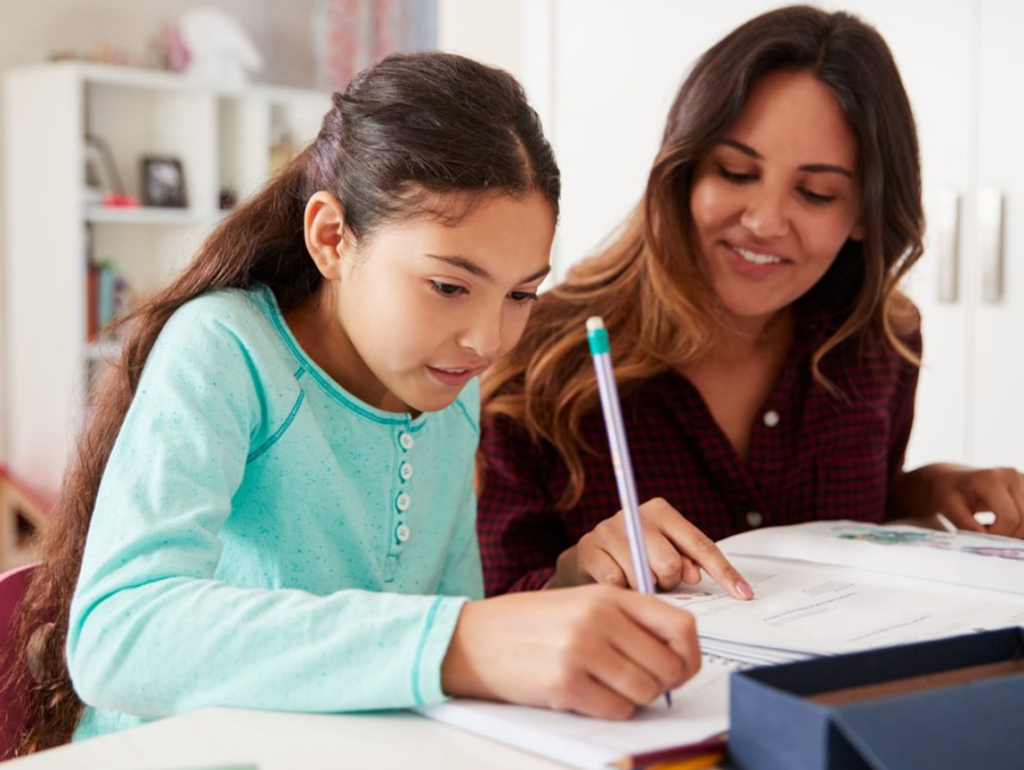
The most significant advantage of home education, done well, is individualisation. A child who is homeschooled can move at their own pace, in their own sequence, with the curriculum shaped around their actual interests and strengths. This is not just a theoretical benefit — research on homeschooled children’s academic outcomes consistently shows that, on average, they perform at or above the level of their traditionally schooled peers. The caveat is significant: quality varies enormously based on the parent’s engagement, education level, and approach.
A second significant advantage is time. The same curriculum that takes six hours in a classroom can often be covered in two to three hours of focused one-to-one engagement at home. The remaining time can be used for deep project work, physical activity, creative pursuits, and real-world learning — things that enrich a child’s development in ways that conventional schooling often cannot accommodate. The 95% rule about time with your child before age 18 gives important context to why the quality of those additional hours at home matters so profoundly.
The Genuine Challenges
The socialisation question is the most commonly raised concern — and it deserves honest engagement rather than dismissal. Children who are homeschooled and primarily interact with family, a handful of friends, and structured activities may have significantly less experience of the social complexity of large, mixed-age peer groups. Learning to navigate conflict, exclusion, popularity dynamics, and the experience of not being the most special person in the room are genuinely important developmental challenges that the conventional school environment provides by default.
The other major challenge is the parent. Homeschooling requires a sustained, enormous investment of parental time, energy, and patience. It requires genuine commitment to maintaining educational quality rather than slipping into comfortable but unchallenging routine. It requires managing the complex relational dynamics of being simultaneously your child’s primary adult relationship and their teacher. And it requires managing your own needs for adult interaction, professional identity, and personal space — all of which homeschooling puts significant pressure on.
The Questions I Ask Every Parent Considering This
Why do you want to homeschool? Is it rooted in a positive vision of what you want for your child, or is it primarily driven by dissatisfaction with school? Both can be valid starting points, but they produce different outcomes. What is your child’s personality and social orientation? Some children genuinely thrive outside institutional environments. Others need the structure and peer stimulation that institutions provide. Can you sustain this? Not for the first enthusiastic month, but year after year, through the difficult patches, through the developmental stages that are less fun to teach?
And perhaps most importantly: are you willing to regularly and honestly evaluate whether it is working for your child — and to change course if the evidence says it is not? The willingness to hold the decision lightly rather than becoming ideologically committed to it is, in my experience, one of the most important qualities of parents who make homeschooling work well.
Frequently Asked Questions
Do homeschooled children struggle with university applications?
This varies significantly by country and institution. In the UK and US, many universities now have established processes for evaluating homeschooled applicants, and strong academic records — often demonstrated through portfolios, standardised tests, or external qualifications — are typically the key. Research the specific requirements of universities your child might be interested in early, as preparation timelines differ from those of conventionally schooled students.
How do I know if my child is falling behind?
Regular use of standardised assessments — available through various educational publishers — provides a useful benchmark against national curriculum expectations. Beyond formal tests, observe your child’s engagement, curiosity, and ability to apply what they are learning in real-world contexts. Many experienced home educators also recommend periodic informal assessments through projects, presentations, or discussions rather than formal testing alone.
Can I homeschool if I do not have a teaching qualification?
In most countries, a teaching qualification is not required to homeschool. What matters most is genuine engagement with your child’s learning, willingness to keep learning alongside them, and access to quality curriculum resources. Many highly successful home educators are not trained teachers. Curiosity, patience, and the ability to find the right resources and support — including co-ops, tutors for specific subjects, and online educational programmes — matter far more than formal credentials.
Sources & further reading: American Academy of Pediatrics: Child Education and Health | UK Department for Education: Home Education | Psychology Today: Learning and Child Development.

Cassandra Simpson is a wellbeing and relationship writer with a BSc in Psychology and five years of experience working in community mental health support. She writes about love, friendship, boundaries, and the emotional work of belonging — drawing on both academic grounding and the hard-won perspective that comes from navigating her own relationship patterns, friendships, and personal growth in real time. Cassandra trained as a peer support facilitator and has spent years exploring attachment theory, interpersonal dynamics, and the psychology of connection. Her writing is shaped by a deep belief that most relationship struggles come not from failure, but from the absence of honest, accessible information about how human connection actually works.
Further Reading