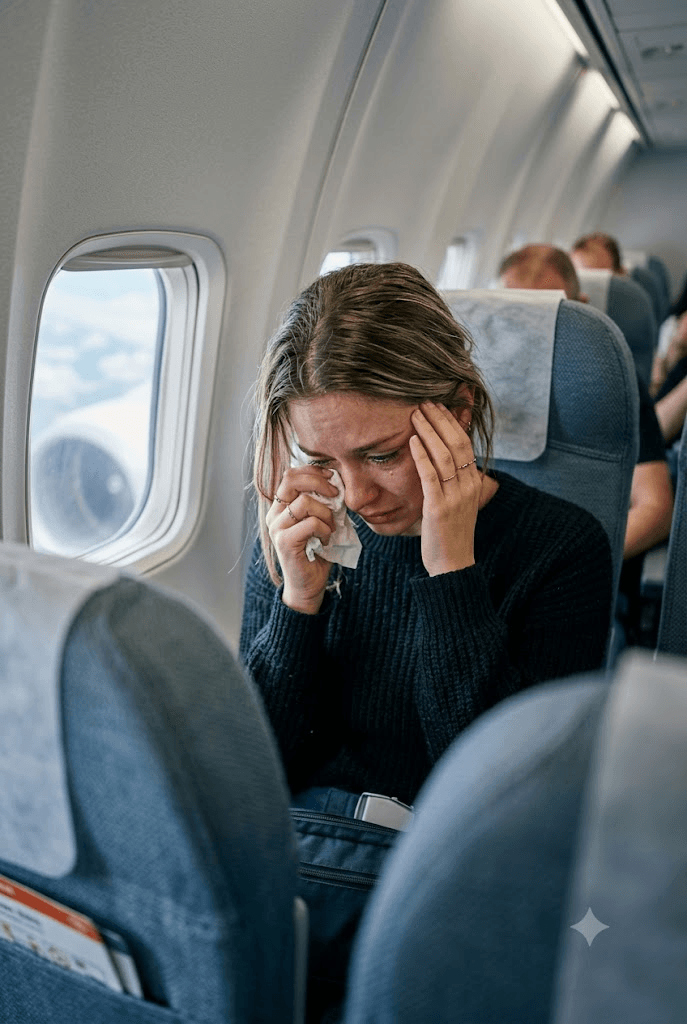
Hello beautiful people,
Let me just say it before I lose my nerve: I once caught full-blown butterflies for my sister’s boyfriend. Not a stranger on the train, not a coworker, not a situationship gone quiet — my sister’s boyfriend. The guy who sat at our family dinners and passed me the salad. If catching the feels for a sisters boyfriend is your secret too, breathe, because you are about to feel a lot less alone.
You are not a monster, and you are not broken. Attraction is one of the least logical things the human brain does, and it does not check the guest list before it shows up. What matters is not the feeling that arrived uninvited — it is what you choose to do next. So let’s do some digging together, and I’ll give you my honest verdict at the end.
First, the Shame Check
The feeling itself is not a moral failing. You did not decide to feel this. Feelings are data, not instructions. The healthy, grown-up move is to notice it, name it, and then choose your behaviour on purpose. That distinction — between having a feeling and acting on it — is the entire ballgame, and it is where your integrity lives. If you have ever struggled to separate your value from who wants you, my piece on self-worth beyond relationships is a gentle place to start.
7 Psychology-Based Reasons You Catch Feelings for a Sisters Boyfriend
1. The proximity effect. Psychologists have shown for decades that we develop attraction to the people we are simply around the most. Repeated, close, low-effort contact breeds familiarity, and familiarity is the soil attraction grows in (Psychology Today). Your sister’s partner is, by design, always around. Your brain is doing exactly what brains do.
2. The mere-exposure effect. Closely related: the more we are exposed to a person, the more we tend to like them (Verywell Mind). It is the same reason a song you did not rate on first listen becomes “your song” by the tenth. Proximity plus repetition can quietly manufacture warmth you never consciously chose.
3. Misattribution of arousal. When we are around excitement, laughter, or the buzz of a big family gathering, our body gets activated — and the brain sometimes mislabels that general buzz as attraction to whoever happens to be standing there (APA Dictionary of Psychology). The classic research on this is genuinely eye-opening once you know it.
4. He is pre-vetted. Your sister already did the screening. He is kind, he is stable, he shows up — otherwise he would not be there. So your radar pings “safe, desirable, proven” without you having to risk anything. It is borrowed trust, and it is seductive. It is worth checking that what you are drawn to is real: my guide to the signs of a genuinely healthy relationship can help you tell the difference.
5. The grass-is-greener gap. When you are single and lonely (and I have been so lonely), you compare your empty chair to someone else’s occupied one. You are measuring your behind-the-scenes against their highlight reel. What you are craving is often the relationship, not the man himself.
6. Attachment patterns running the show. If your attachment style leans anxious, an already-taken man can feel like the safest place to park longing — because nothing can actually happen, so nothing can actually hurt you. The fantasy is protective, not prophetic. I unpack this fully in what your attachment style is doing to your relationships.
7. Forbidden-fruit reactance. Tell the human brain something is off-limits and it wants it more (Psychology Today on reactance). The “no” itself adds a charge. A lot of what feels like destiny is really just the psychology of the barrier. It is the same hook that keeps people chasing unavailable partners — something I wrote about in my piece on breadcrumbing and why he keeps you hooked.
So… Is It Real, or Is It a Story My Lonely Brain Is Telling Me?
Here is my verdict, and I am saying it as your friend: almost always, it is the story. When you strip away proximity, novelty, forbidden-fruit charge, and plain old loneliness, what is usually left is not a soulmate — it is a symptom. It is a flare telling you what you are hungry for: connection, safety, being chosen. Those are real needs. This particular man — who just happens to be a sisters boyfriend — is simply the nearest available screen to project them onto. Understanding that your feelings for a sisters boyfriend are a signal, not a sentence, is the moment everything starts to loosen its grip.
What to Actually Do About Feelings for a Sisters Boyfriend
Create distance where you can. You do not have to make a dramatic announcement or blow up a family — just quietly reduce the one-on-one contact and the private in-jokes that feed the feeling. Redirect the energy: a crush on a sisters boyfriend is actually a spectacular prompt to figure out what you truly want in a partner, because your brain just handed you a list of the qualities you are drawn to.
And please, do not confess it to him or to your sister in the name of “honesty.” That is not honesty; that is handing your discomfort to someone else to carry. Protecting your sister’s peace is the loving act here. A crush fades far faster when it is starved of oxygen than when it is fed with confessions and long, loaded conversations.
If the feelings are loud and sticky and will not fade, that is worth gentle curiosity, not panic — it usually means an old attachment wound is asking for attention, and a good therapist is worth their weight in gold for that. There is no shame in getting support to untangle why the unavailable feels so magnetic.
You are allowed to be a person who felt something inconvenient and still chose the high road. That is not repression, my loves. That is character. And the right man — an available, yours-to-keep man — is still out there, no salad-passing required.
Love Arlyn xoxo

Arlyn Parker is a wellness and mindfulness writer with a background in holistic health coaching. She completed her practitioner training in mindfulness-based stress reduction (MBSR) and holds a certification in positive psychology from an accredited UK provider. Over six years of working with clients navigating anxiety, burnout, and major life transitions gave Arlyn a front-row seat to what actually helps people create sustainable calm — and what doesn’t. Her own experience with burnout in her late 20s, and the slow, deliberate process of rebuilding her health and habits, is the foundation of everything she writes. Arlyn’s work is not about aspirational wellness — it’s about practical, evidence-informed strategies for people living real, complicated lives.