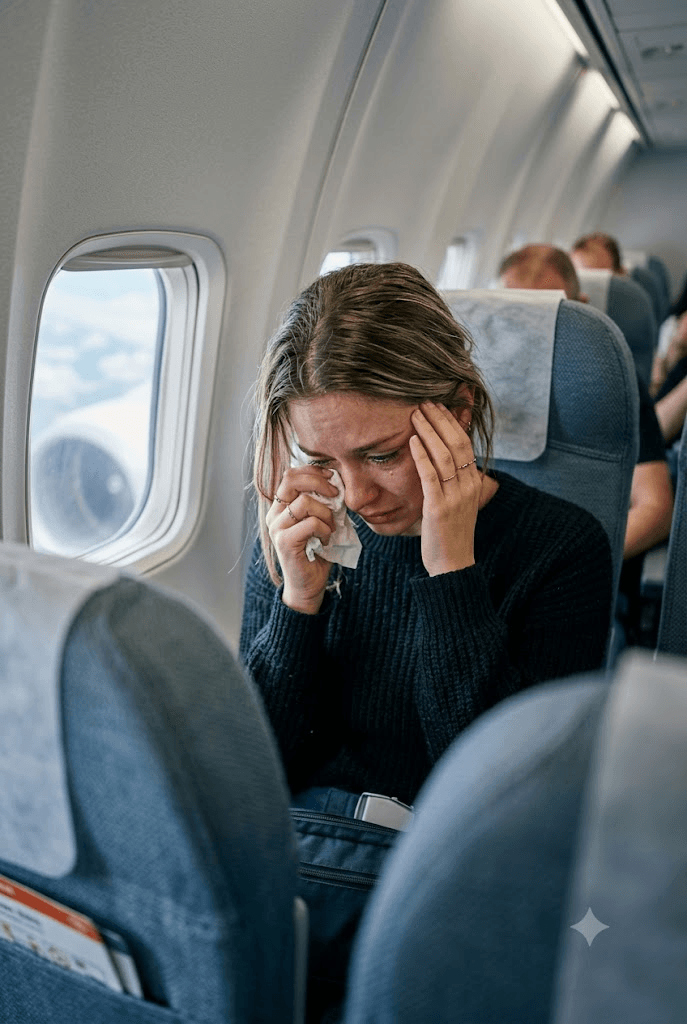
Stress is sneaky. It does not always announce itself with obvious anxiety attacks or visible breakdowns. More often, it settles in quietly — normalising itself over weeks and months until you forget what it felt like to not feel this way. Sleep therapists and stress researchers consistently find that the people most at risk from chronic stress are those who have adapted to it so thoroughly that they no longer recognise it as stress at all.
Here are eight signs — many of them unexpected — that your stress levels may be significantly higher than you realise.
1. You Are Waking Up Between 2am and 4am
Early morning waking — specifically that jarring 2am to 4am awakening that leaves you lying in the dark with a busy, anxious mind — is one of the most characteristic signs of elevated cortisol. Cortisol, the body’s primary stress hormone, naturally peaks in the early morning hours to prepare the body for the day. When overall stress levels are high, this peak arrives earlier and more intensely than it should, waking you before your body has completed its full rest cycle.
If this is a regular experience for you — and especially if the thoughts that come during those waking hours are anxious, ruminative, or problem-focused — it is your body signalling that its stress response is working overtime.
2. Small Things Are Disproportionately Irritating
When your stress tolerance is depleted, your nervous system has very little buffer. Things that would normally be minor irritants — a slow internet connection, a misplaced item, a change of plan — generate a reaction that feels far bigger than the trigger warrants. This disproportionate irritability is not a character deficiency; it is a physiological signal that your stress load has exceeded your available capacity for equanimity.
If you notice yourself snapping at people you care about, feeling inexplicably furious at minor inconveniences, or experiencing a pervasive low-level irritation that follows you through the day, it is worth asking what might be accumulating beneath the surface.
3. You Are Getting Ill More Frequently
Chronic stress suppresses immune function through a well-understood mechanism: cortisol is immunosuppressive in sustained high doses. This is why people often get ill immediately after a period of intense stress ends — when the cortisol drops, the immune system’s suppressed responses re-emerge, and whatever pathogens had been circulating get their opportunity. If you have noticed an increase in colds, infections, cold sores, or digestive bugs over the past several months, stress-induced immune suppression may be a significant contributing factor.
4. You Have Difficulty Making Decisions
Decision fatigue and stress fatigue interact powerfully. The prefrontal cortex — the brain region responsible for executive functions including decision-making, planning, and impulse control — is one of the most stress-sensitive areas of the brain. Elevated cortisol impairs prefrontal cortex function, which is why people under significant stress often find themselves dithering over minor choices, avoiding decisions entirely, or making impulsive choices they later regret.
If you find that choosing between two meals, selecting an outfit, or making simple plans feels exhausting or unexpectedly difficult, this is worth noting as a potential sign of neurological stress load rather than indecisiveness. Understanding what happens to your mind and body when you slow down offers important context for what recovery from this state looks like.
5. Your Memory Feels Less Sharp
Chronic stress impairs memory consolidation — the process by which short-term memories are transferred to long-term storage during sleep. When stress disrupts sleep architecture, this consolidation process is compromised. Additionally, the hippocampus — the brain’s primary memory centre — is particularly vulnerable to stress-related hormonal changes. If you have been noticing that you forget words more easily, struggle to recall recent conversations, or walk into rooms and cannot remember why, chronic stress may be a significant factor.
6. You Have Lost Enthusiasm for Things You Normally Enjoy
Anhedonia — the reduced capacity for pleasure or interest in previously enjoyable activities — is often associated with depression, but it is also a common symptom of chronic stress and burnout. When the nervous system is chronically overstimulated by stress, it begins to flatten emotional responses across the board, dampening not just negative emotions but positive ones too. The activities and interests that normally provide pleasure, meaning, and restoration gradually feel flat, effortful, or simply no longer appealing.
If you find yourself skipping things you used to love, feeling nothing in situations that should bring joy, or experiencing a general greying of your emotional landscape, this is a significant signal. It often precedes more obvious burnout and deserves prompt attention. This is also one of the signs that taking a genuine rest is not optional — it is urgent. Exploring why self-care is never selfish is an important mindset shift for people who have normalised running on empty.
7. You Are Experiencing Unexplained Physical Symptoms
Stress manifests physically in a remarkably wide range of ways: headaches (particularly tension headaches at the base of the skull or across the forehead), jaw clenching and bruxism (teeth grinding), tight shoulders and upper back, digestive disturbances including IBS-like symptoms, skin flare-ups, hair loss, and changes in libido. Many people seek medical treatment for these physical manifestations without ever identifying stress as the underlying driver.
The body keeps score — a phrase borrowed from trauma literature that applies equally well to the accumulation of chronic stress. Physical symptoms that do not have an obvious medical explanation are often the body’s most insistent way of communicating what the conscious mind has refused to acknowledge.
8. You Are Using More Substances Than Usual
An increase in alcohol consumption, more frequent caffeine use to get through the day, increased reliance on cannabis or other substances, or a pattern of reaching for any numbing or stimulating substance more frequently than your baseline is a behavioural signal of elevated stress. Substances offer temporary relief from the discomfort of an overactivated stress response — but they also interfere with sleep, worsen anxiety, and add to the overall physiological burden in ways that compound the original problem.
Noticing this pattern without self-judgment — simply as information — is a useful starting point. What need is the substance meeting? What would happen if you addressed that need more directly? The process of rebuilding after things fall apart often begins with exactly this kind of honest self-examination.
Frequently Asked Questions
What is the difference between stress and burnout?
Stress typically involves too many demands: too much to do, too many pressures, too many responsibilities. It is characterised by overengagement — everything feels urgent and important. Burnout, by contrast, involves the depletion that comes from prolonged, unrelieved stress: emotional exhaustion, detachment, cynicism, and a sense that nothing you do makes a difference. If stress is the excess, burnout is the empty. The transition from stress to burnout happens gradually and is easier to reverse the earlier it is caught.
How do I lower my stress levels when I cannot change my circumstances?
Two categories of intervention help even when circumstances cannot change: physiological regulation (exercise, sleep, breathwork, cold exposure, and time in nature all directly reduce cortisol) and cognitive reframing (developing the skill of distinguishing between what you can and cannot control, and deliberately focusing attention on the former). Therapy — particularly CBT, ACT, or stress-management focused approaches — can significantly increase your capacity to manage stress that cannot be eliminated at its source.
When does stress become a medical concern?
Stress warrants medical attention when it is significantly impairing your daily functioning, persisting for more than a few weeks without relief, producing physical symptoms that need investigation, or accompanied by thoughts of self-harm or hopelessness. Your GP can assess whether anxiety or depression treatment is appropriate, refer for talking therapy, or rule out physical conditions that may be contributing to your symptoms. Reaching out is not an overreaction — it is appropriate self-care.
Sources & further reading: Sleep Foundation: Stress and Sleep | APA: Stress and Its Effects on Health | NCBI: Sleep and Mental Health Research.

Jack Rylie is a writer and mental health advocate who has spent the past decade exploring resilience, identity, and emotional rebuilding — both as a writer and as someone who has navigated significant personal upheaval. After a career change in his early 30s that coincided with the end of a long-term relationship, Jack spent two years in psychotherapy and became deeply interested in how men process loss, change, and vulnerability in a culture that rarely creates space for it. He holds a Post-Graduate Certificate in Psychology of Mental Health and has contributed to mental health awareness campaigns with several UK-based organisations. His writing draws on clinical research, personal experience, and a long-held belief that honest male vulnerability is not a weakness — it is the foundation of genuine resilience.