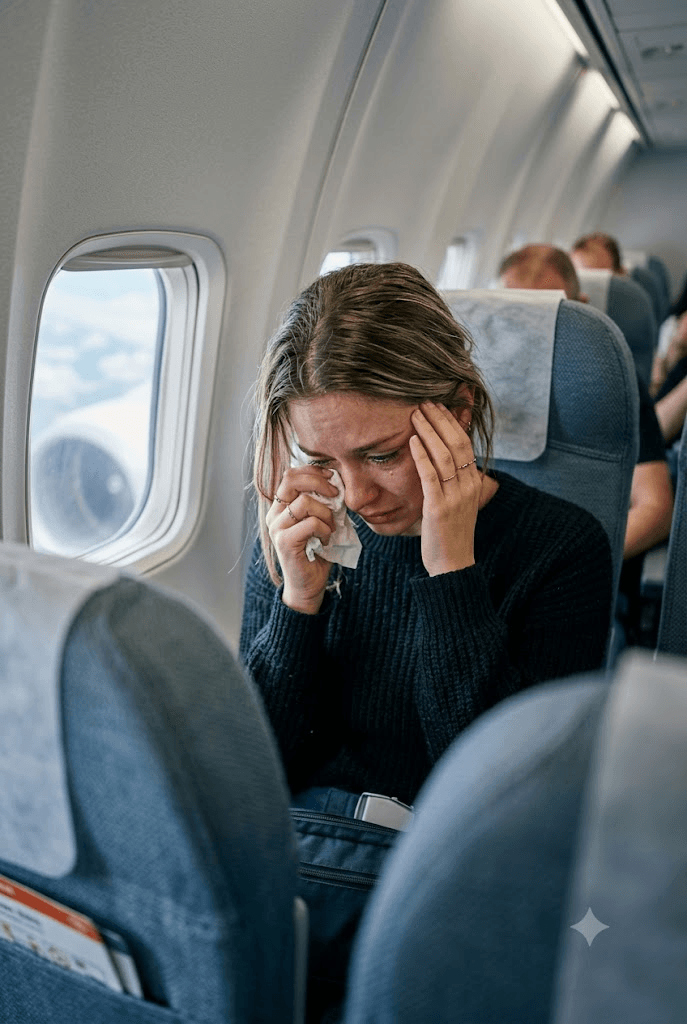
I came across the concept of “silent forgiveness” at a time when my relationship was in one of those difficult stretches where the same argument kept happening — different surface content, same underlying wound, same unresolved thing sitting between us that neither of us quite knew how to get to. I wasn’t looking for it. I was looking for something to be angry at, honestly. But it landed in a way that made me put my phone down and think for a while.
The concept, broadly associated with the post-breakup and post-conflict conversation that circulated around Molly-Mae Hague’s relationship story, is this: the decision to let something go — not in a performative “I forgive you” conversation, but in a genuine internal releasing of the grievance — before the other person has necessarily done enough to earn it. Not because you don’t matter. Because the relationship does.
What Silent Forgiveness Actually Is (and Isn’t)
Let me be clear about what this doesn’t mean. It doesn’t mean silently tolerating ongoing harm. It doesn’t mean suppressing legitimate grievances in a way that causes you to slowly dissociate from a relationship you’re unhappy in. It doesn’t mean forgiving behaviour that is fundamentally incompatible with your wellbeing and continuing anyway. The most harmful misapplication of forgiveness concepts — in relationship culture and beyond — is when they’re used to encourage people to stay in damaging situations by reframing the damage as their problem to release rather than the other person’s responsibility to address.
What silent forgiveness does mean: the internal decision, made for yourself rather than for performance, to stop investing emotional energy in a grievance that you have already processed — that has been acknowledged, that you’ve understood, that you’ve decided to work through. This kind of forgiveness is for you, not for the other person. It releases you from the ongoing cost of carrying the wound, regardless of whether the other person is aware it’s happened.
The Psychology of Forgiveness
Research on forgiveness by Dr. Everett Worthington at Virginia Commonwealth University — one of the leading researchers in this field — has found consistently that forgiveness is associated with significant and lasting improvements in wellbeing, including lower levels of depression, anxiety, and anger, better cardiovascular health, and improved relationship quality. Crucially, these benefits accrue to the person doing the forgiving, not primarily to the person forgiven. The forgiver’s health improves; the forgiven’s health is unaffected by whether or not they were forgiven.
This reframes forgiveness entirely: it is not primarily a gift to the other person, and it is not dependent on their deserving it. It is a health decision for yourself.
How to Actually Do It
Forgiveness is a process, not an event — and understanding this prevents the frustrating experience of deciding you’ve forgiven something and then noticing the resentment return. Dr. Worthington’s REACH model offers a useful framework: Recall the hurt honestly rather than minimising it; Empathise with the other person’s perspective without excusing the behaviour; Altruistically offer forgiveness as a gift rather than a transaction; Commit to the forgiveness decision even when the feelings haven’t caught up; and Hold onto the decision when the residual feelings resurface.
The “hold onto” part is particularly important. Forgiveness doesn’t mean the hurt stops feeling real — it means you’ve decided not to be defined by it or to keep feeding it. The memory remains; the active grievance is released. This is different from forgetting, and it’s different from pretending it didn’t happen.
What Forgiveness Did to My Relationship
I tried the silent forgiveness experiment in that difficult stretch, and what I noticed surprised me. The argument we kept having didn’t disappear. But my participation in it changed. When I’d genuinely released some of my grip on the accumulated score I’d been keeping — the list of times I’d felt let down, the weight of unacknowledged grievances — I was less reactive in the moment and less motivated to revisit the wound. And somehow, without me announcing this, the dynamic between us shifted. My partner noticed something had changed in how I was engaging, though I hadn’t explained what I was doing or why.
I don’t think forgiveness fixed our relationship. I think it fixed my part of a dynamic that was making it harder than it needed to be. Those are different things, but the second one was genuinely available to me in a way the first wasn’t. Understanding how to balance your needs with closeness in a relationship is part of the same work — and knowing what a genuinely healthy relationship looks like helps you understand what you’re working toward and whether the relationship is fundamentally worth the work. The deeper practice of authentic vulnerability — being honest about what you need rather than nursing silent wounds — is what made the forgiveness actually land for me, rather than just being a concept I was performing.
Frequently Asked Questions
Does forgiving someone mean what they did was okay?
No — and this is one of the most important distinctions in the psychology of forgiveness. Forgiveness does not mean condoning, excusing, or forgetting what happened. It means deciding not to be perpetually defined by it — choosing to release the active grievance for your own health rather than for the other person’s absolution. You can forgive someone and still set firm limits on what you’ll accept in the future. You can forgive someone and still choose to end a relationship. The forgiveness is about your internal relationship to the wound, not about the external judgment of the behaviour.
How do you forgive someone who hasn’t apologised?
By reframing forgiveness as something you do for yourself rather than something you give to them. An apology from the other person is valuable and meaningful; it’s also not required for you to release yourself from carrying the grievance. The resentment you’re holding costs you energy regardless of whether the other person acknowledges it — and that cost continues until you release it, whether or not the apology comes. This is particularly important in situations where an apology is unavailable — the person has died, the relationship has ended, or the person is unwilling or unable to acknowledge what happened.
When is it not appropriate to forgive and stay?
When the behaviour is ongoing rather than historical, when it crosses into abuse (emotional, physical, financial, sexual), and when the other person is unwilling to acknowledge or work on what caused the harm. Forgiveness is healthy; remaining in a relationship that continues to harm you while calling it forgiveness is a different thing. You can forgive someone and still leave — in fact, sometimes leaving is what makes genuine forgiveness possible, by removing you from the position of ongoing exposure to the harm.
Further Reading & Sources
- APA: Healthy Relationships
- Psychology Today: Relationships
- PubMed: Relationships & Well-being Research

Gracie Webb is a writer and researcher with a first-class degree in Psychology and over seven years of experience studying behavioural change, self-development, and the science of decision-making. She worked for four years as a research assistant in a cognitive behavioural therapy clinical setting, where she observed first-hand the gap between what people know they should do and what they actually do — a gap that sits at the centre of nearly all her writing. Gracie’s personal journey through a toxic long-term relationship, the slow process of rebuilding her self-worth, and the year she spent in therapy gave her both the intellectual framework and the personal authority to write about growth with honesty. Her work is rigorous, compassionate, and consistently aimed at the reader who is genuinely trying to change.