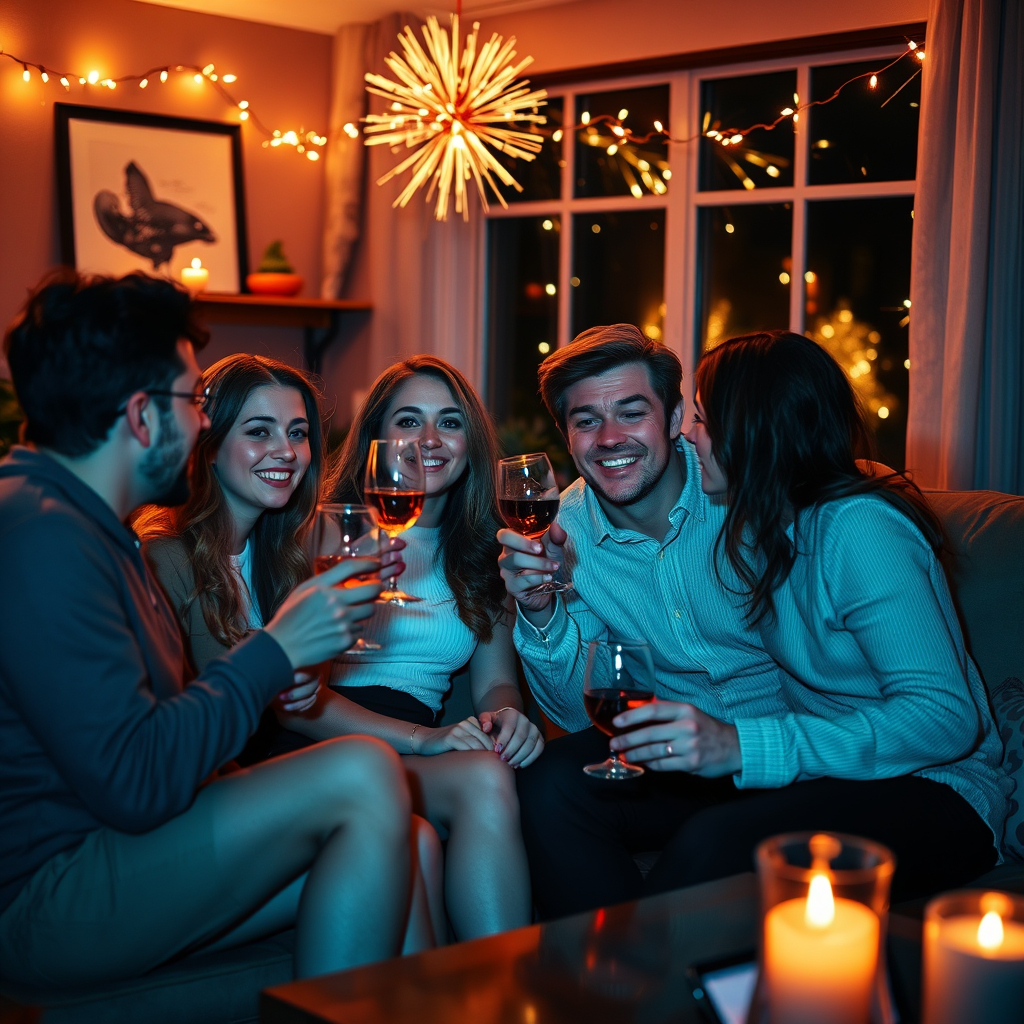
I’ve had New Year’s Eves that cost a fortune and left me feeling deflated by 12:05am, and I’ve had ones that cost almost nothing and turned into the evenings I still talk about years later. The pattern, I’ve noticed, has almost nothing to do with how elaborate the plan was and almost everything to do with whether the evening felt genuine — whether the people were the right ones, the atmosphere was warm, and nobody was performing their idea of a perfect NYE for social media.
If you’re looking for ideas that skip the hype and actually deliver a good time, these six approaches have something in common: they prioritise connection over spectacle, presence over performance.
1. The Deliberate Dinner Party
Not just any dinner — a deliberately curated one. Invite eight to twelve people maximum, mix friend groups who don’t usually overlap, and assign everyone a dish rather than doing everything yourself. The act of contributing something creates investment in the evening. Set the table properly — candles, actual napkins, something that signals this matters. Ban phones during dinner. Choose music that creates atmosphere without demanding attention. Research by Dr. Robin Dunbar at Oxford on social bonding has found that shared meals are one of the fastest builders of genuine group connection — the act of eating together synchronises mood and creates the kind of warmth that later conversations build on.
2. The Low-Key Gathering With a Twist
A small group, your living room, comfortable clothes. But add a single element that makes it memorable: a cocktail-making masterclass you do together (tutorials on YouTube are genuinely good), a blindfolded cheese or wine tasting, a group film quiz where everyone contributes questions, or a “best of the year” sharing round where everyone talks about a film, book, song, or experience from the past twelve months that genuinely moved them. The twist lifts it out of the ordinary without making it stressful to organise.
3. A Long Walk Into the New Year
This sounds counterintuitive but it’s one of the most genuinely joyful New Year’s Eves I’ve ever had. A group of friends, a route planned in advance, flasks of hot chocolate and wine, and finding somewhere outdoors to be at midnight — a hill with a view of the city, a beach, a field where you can see the fireworks from a distance. The cold and the dark and the effort of getting somewhere create a shared experience that indoor parties rarely match. Research on collective experiences and memory by Dr. Uri Hasson at Princeton found that shared physical experiences — particularly ones involving mild challenge — create stronger shared memories than passive social events. This qualifies.
4. The Meaningful Solo Evening
Here’s one for when the pressure of group events doesn’t appeal. A deliberately curated solo evening: your favourite meal, the film you’ve been saving, a proper journal session reviewing the year and setting your intentions for the next one, and midnight spent however feels right — whether that’s watching the countdown or going to bed early without guilt. Solo New Year’s is still stigmatised but it’s completely legitimate, and for introverts or people in a more reflective life moment, it can be genuinely nourishing rather than sad. The year ahead starts better when you’ve arrived at it intentionally rather than stumbling over the threshold exhausted from obligation. This connects to everything explored in building a genuinely positive mindset for the year ahead.
5. The Trip That Makes It Different
Not necessarily abroad — a night or two somewhere you don’t usually go. A cottage with a fire. A city you’ve been meaning to visit. A coastal town in winter, which has its own particular magic when it’s quiet and slightly wild. Going somewhere new for New Year’s removes you from the familiar enough to actually feel like a transition has happened — which is, when you think about it, what the whole occasion is supposed to be about. Book early, keep it small, and resist the urge to over-programme it.
6. The Gratitude and Intentions Evening
This works beautifully with a small group of people you trust enough to be honest with. Each person brings their answers to the same questions: one moment from the past year they’re most grateful for, one thing they’re releasing as the year turns, and one intention — not a resolution, an intention — for the year ahead. These are shared around the group, without comment or advice, just witnessed. It’s remarkably moving and often the thing people remember long after they’ve forgotten what they ate or what the weather was. Research on expressive writing and social sharing of meaningful experiences — by Dr. James Pennebaker and Dr. Jonathon Brown — consistently shows that articulating significant experiences with supportive others deepens their positive impact and supports forward-looking motivation.
Whatever you choose, the theme is the same: presence matters more than perfection, and the people matter more than the plan. If you’ve been thinking about what you genuinely want from the year ahead — beyond the surface-level resolutions — this piece on rebuilding intentionally might offer some useful framing. And treating yourself with the generosity you deserve as you plan is the best possible start to any new year.
Frequently Asked Questions
How do I avoid the New Year’s Eve pressure of having a “perfect” night?
Lower the stakes by focusing on what you actually enjoy rather than what looks good. The most memorable evenings tend to be ones where nobody was trying very hard to make them memorable — where the plan was simple enough that there was room for things to happen organically. Give yourself permission to have a quiet evening, to leave early from a party if you want to, or to spend it with one person instead of twenty. Your enjoyment of the evening is the only measure that matters.
What’s a good New Year’s Eve idea for someone who doesn’t drink?
All of these ideas work without alcohol, and several of them are actually better without it. The walk, the meaningful sharing evening, and the solo intentional night are all alcohol-independent. For the dinner party or low-key gathering, investing in interesting alcohol-free options — good sparkling water, sophisticated mocktails, interesting non-alcoholic spirits — means you’re never just drinking water while everyone else has something interesting.
How do I make a small New Year’s Eve gathering feel special without spending a lot of money?
Atmosphere over expense: candles, a good playlist, proper glasses rather than plastic, and actual table settings cost very little and transform a space. Shared contributions — everyone brings something — both reduce your cost and increase investment. And a single distinctive element (a game, a ritual, a theme) does more for the evening’s distinctiveness than any amount of expensive food or decoration. The memory of an evening is made of how it felt, not what it cost.
Further Reading & Sources

Cassandra Simpson is a wellbeing and relationship writer with a BSc in Psychology and five years of experience working in community mental health support. She writes about love, friendship, boundaries, and the emotional work of belonging — drawing on both academic grounding and the hard-won perspective that comes from navigating her own relationship patterns, friendships, and personal growth in real time. Cassandra trained as a peer support facilitator and has spent years exploring attachment theory, interpersonal dynamics, and the psychology of connection. Her writing is shaped by a deep belief that most relationship struggles come not from failure, but from the absence of honest, accessible information about how human connection actually works.