Most of us have experienced it: you see a photo of yourself and something feels wrong. The person in the picture does not look like the person you see in the mirror or the one you imagine yourself to be. Whether it is an angle that feels unflattering, an expression that looks forced, or simply a version of yourself that feels disconnected from who you know yourself to be — the gap between how you see yourself and how you appear in photographs can be genuinely distressing.
But here is what is worth understanding: the disconnect between your photographs and your sense of self is more complex, and more interesting, than simple vanity. There are real psychological and technical reasons why photos often fail to capture the fullness of who you are — and equally, there are ways to change the narrative.
Why Photos So Often Feel Like a Poor Representation
The Mirror Image Reversal Effect
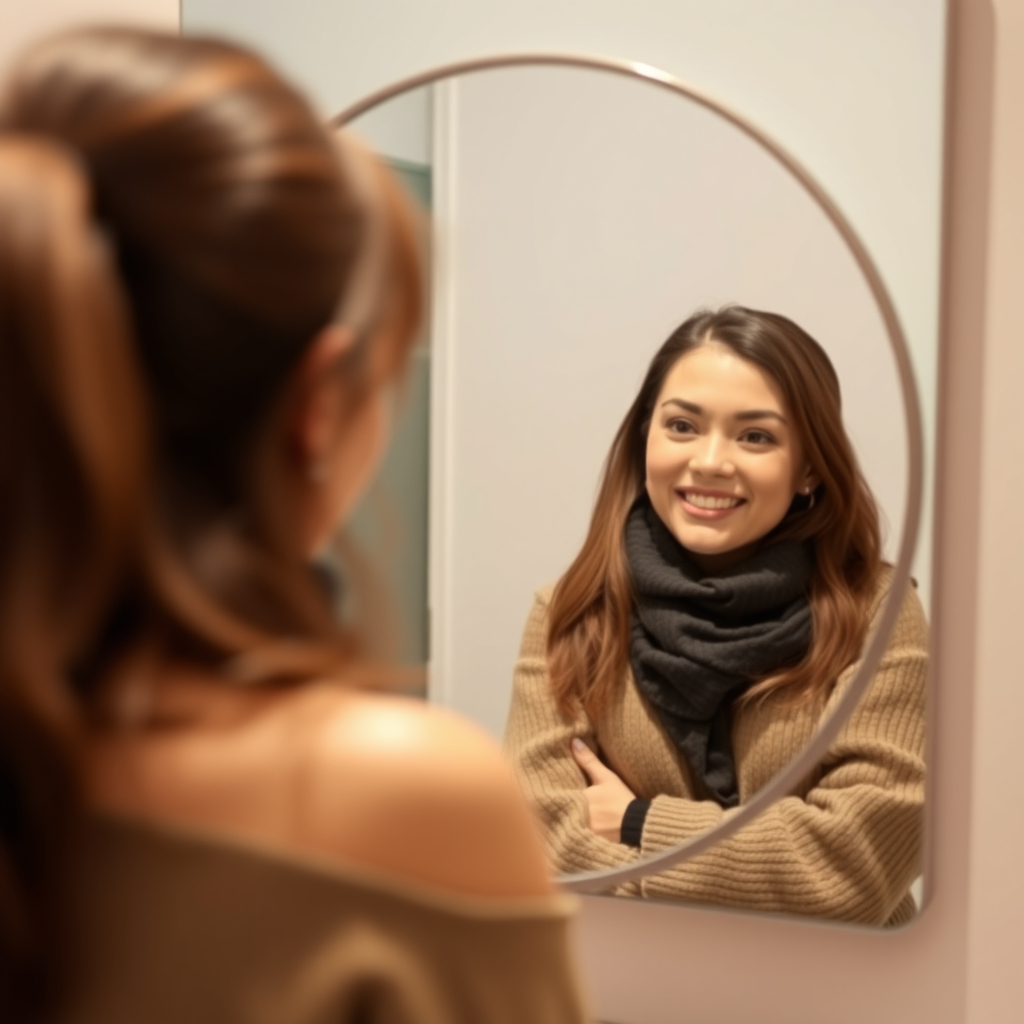
One of the most commonly cited reasons people dislike photos of themselves is the mirror image reversal effect. When you look in a mirror, you see yourself in reverse — the left side of your face appearing on the right, and vice versa. Because this is the version you are most accustomed to, photographs — which show you as others actually see you — can look subtly “wrong.” You are not used to seeing your non-reversed self. Asymmetries that seemed small in the mirror feel more pronounced. The overall effect is unsettling in a way that is difficult to articulate.
Interestingly, studies have found that people tend to prefer the mirror version of themselves, while their friends and partners prefer the true image — the one in photographs. You are your own least reliable judge of how you look in pictures.
The Frozen Moment Problem
A photograph captures a single millisecond. In real life, we are animated — our faces move constantly, our expressions shift, our energy is communicated through gesture, posture, voice, and presence. A still image cannot capture any of that. What makes a person compelling and attractive in life — their animated quality, their expressiveness, the way their face transforms when they smile or speak — is absent from a frozen frame. This is why many people look significantly better in video than in photographs, and why photos can systematically undersell you.
The Social Media Distortion Layer
Social media has added a particularly challenging layer to the relationship between people and their photographs. The images we see on Instagram, TikTok, and other platforms are heavily filtered, lit for cameras, retouched, and selected from hundreds of attempts for the single best image. When we compare our unfiltered, unposed, casually taken photographs to the curated perfection of influencer content, we are comparing fundamentally unlike things.
Research consistently shows that heavy social media use is associated with reduced body image satisfaction, particularly in women and girls. The comparison is unconscious and automatic — and it distorts our perception of what “normal” looks like in photographs. Most people’s photos look significantly more like yours than they look like the filtered images you are comparing them to. This relates directly to the broader question of building genuine self-worth that is independent of appearance.
6 Ways to Change the Narrative Around Your Photos
1. Practise Being Photographed More
Discomfort in photographs is often a function of unfamiliarity. People who are regularly photographed — models, actors, presenters — develop an ease with being captured because they have had thousands of opportunities to learn what works. Taking more photos, reviewing them neutrally rather than critically, and gradually expanding your tolerance of seeing yourself is a genuine skill that develops with practice.
2. Learn Your Best Angles and Lighting
Photography has technical realities that can be learned. Natural light from the side or slightly in front of you is generally more flattering than harsh overhead or direct flash. A slightly elevated camera angle is more flattering for most faces than looking up into a lens. Finding these conditions is not vanity — it is practical knowledge that helps photographs better represent how you actually look.
3. Focus on Genuine Expressions Rather Than Posing
Forced smiles photograph poorly. Genuine expressions — including serious, contemplative, or laughing expressions — tend to photograph much better because they involve the full face rather than the lower muscles alone. Having someone say something funny just before the shutter clicks, or being captured mid-movement or mid-conversation, produces more authentic and usually more compelling images than careful posing.
4. Curate What You Share Without Deleting What You Keep
You have absolute discretion over which photographs you share publicly. But keeping photographs — even ones you would not share — rather than deleting every unflattering image creates a more honest archive of your life. When you look back at photographs from five or ten years ago, the ones that show the full reality of who you were at that time are often the most valuable, regardless of flattery.
5. Reframe What a Photo Is For
If you primarily view photographs as evidence of how you look, unflattering images will always sting. Try reframing photographs as records of moments, places, relationships, and experiences. The primary value of a photograph from your child’s birthday is not how you looked but that you were there. Shifting the purpose of photography from appearance-documentation to memory-documentation fundamentally changes your relationship with images of yourself.
6. Build Self-Worth That Is Independent of Appearance
Ultimately, the most sustainable change is internal. When your sense of self is firmly rooted in your values, your relationships, your capabilities, and your character rather than your appearance, photographs become far less threatening. They are simply imperfect representations of a moment — not verdicts on your worth. Developing this kind of internal anchor is the work of a lifetime, but it begins with small daily choices to define yourself by who you are rather than what you look like. This connects to the deeply personal work of embracing vulnerability and showing up authentically — which is what truly makes a person compelling, in photographs and in life.
Frequently Asked Questions
Why do I look different in photos taken by different people?
The photographer’s skill, the equipment they use, the light available, and the focal length of the lens all dramatically affect how a subject photographs. A portrait taken on a 50mm or 85mm lens with good light by a skilled photographer will typically look significantly more flattering than a quick snap on a wide-angle phone lens in poor light. This is not your face changing — it is photography’s technical variables doing their work.
Is it normal to feel distressed by unflattering photos?
Very common, though not universal. The degree of distress matters: mild discomfort with unflattering images is normal and universal. Significant ongoing distress, avoidance of social situations involving cameras, or persistent preoccupation with appearance in photographs may indicate body dysmorphic disorder or significant body image concerns that are worth exploring with a therapist.
How do I help my child develop a healthier relationship with photographs?
Model the behaviour you want to see: comment on photographs in terms of what is happening in them rather than how people look. Avoid critical comments about your own appearance or others’. Discuss media literacy openly — help your child understand that social media images are heavily curated and filtered. And consistently reinforce that their worth and value have nothing to do with how they photograph.
Further Reading & Sources

Jack Rylie is a writer and mental health advocate who has spent the past decade exploring resilience, identity, and emotional rebuilding — both as a writer and as someone who has navigated significant personal upheaval. After a career change in his early 30s that coincided with the end of a long-term relationship, Jack spent two years in psychotherapy and became deeply interested in how men process loss, change, and vulnerability in a culture that rarely creates space for it. He holds a Post-Graduate Certificate in Psychology of Mental Health and has contributed to mental health awareness campaigns with several UK-based organisations. His writing draws on clinical research, personal experience, and a long-held belief that honest male vulnerability is not a weakness — it is the foundation of genuine resilience.