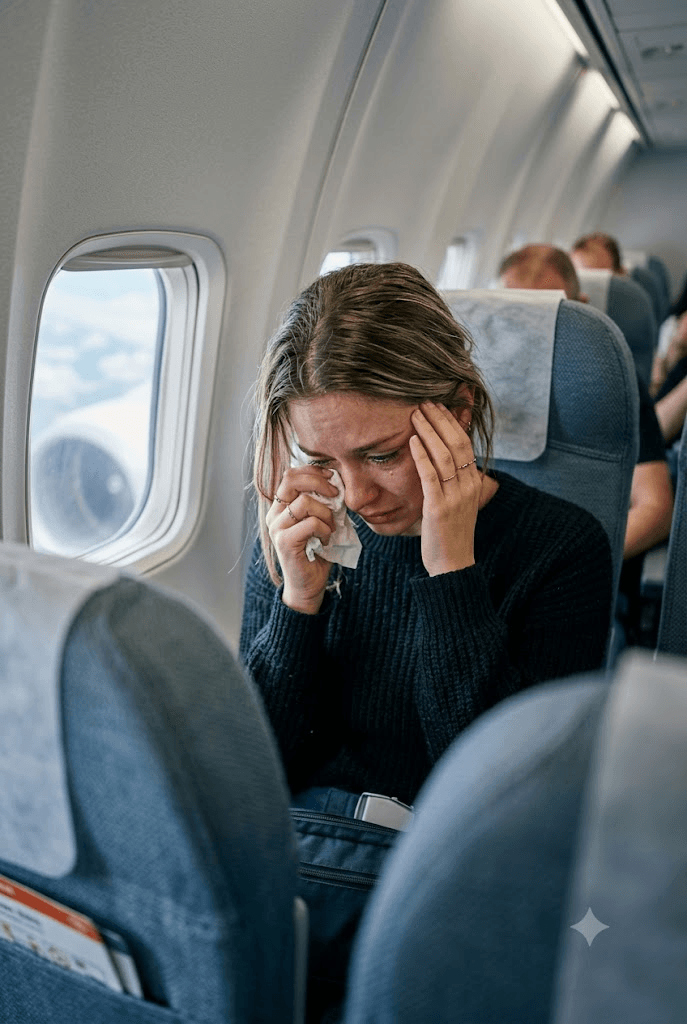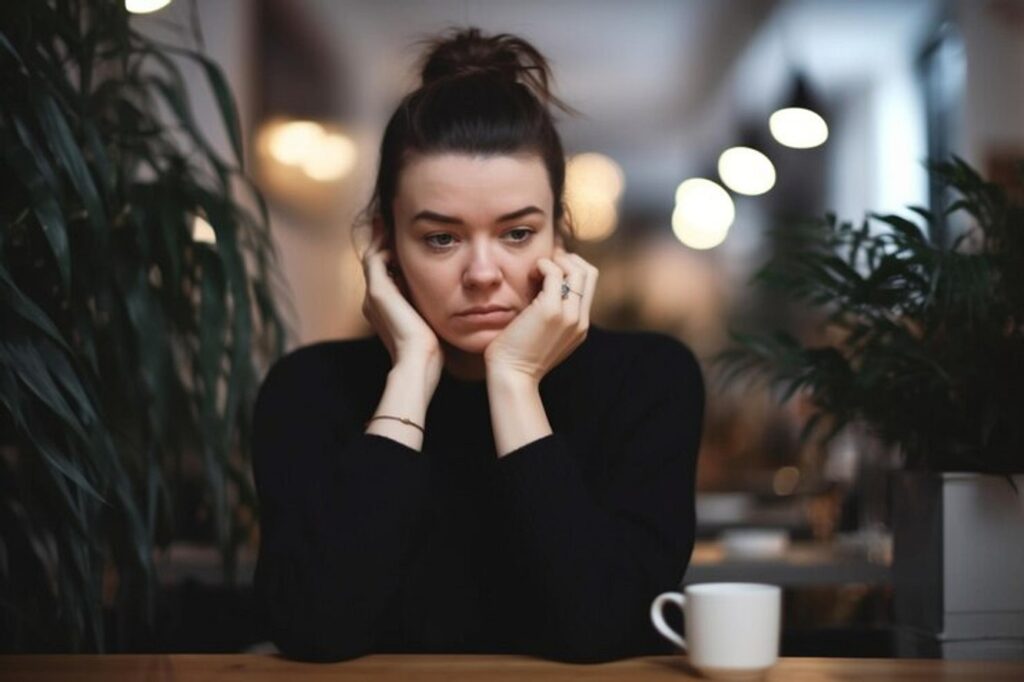
I was in my late twenties when a friend pointed out to me, fairly gently, that I had a habit of deflecting whenever she asked how I actually was. Not deflecting into misery — the opposite. Deflecting into competence. “Fine, busy, managing.” The conversation always bounced back to her, to us, to anything except what was actually happening for me. She said: “You’re the most capable person I know, and I sometimes have no idea if you’re okay.”
That landed. Because she was right. And what she’d identified wasn’t just a conversational tic — it was anxiety I hadn’t named, running quietly underneath everything, disguised as productivity and social ease.
Anxiety in Your 20s and 30s: The Landscape Nobody Fully Prepares You For
Your twenties and thirties are, for many women, the most externally demanding decades of their lives. Career establishment, financial pressure, relationship navigation, often significant life transitions — moving, changing jobs, becoming partnered or unpartnered, potentially becoming a parent. These decades are supposed to be exciting, and they often are. They’re also frequently overwhelming in ways that mainstream culture doesn’t quite acknowledge.
The Women’s Health Initiative has found that anxiety disorders are nearly twice as common in women as in men, with onset typically occurring in young adulthood. The reasons are multifactorial: hormonal influences, differential socialisation (women are more likely to internalise stress rather than externalise it), the particular pressures of navigating femininity in public and professional contexts, and the compounding of multiple high-stakes life domains simultaneously.
What makes this particularly complex in your 20s and 30s is that the symptoms of anxiety often look like, and are rewarded as, high functioning. Working hard, being constantly available, staying up late to finish things, never seeming rattled — these look like strengths from the outside while they quietly drain resources from the inside.
The Forms Anxiety Takes in This Life Stage
Anxiety doesn’t always announce itself as anxiety. In your twenties and thirties, it often looks like perfectionism — the conviction that things need to be done a certain way or something bad will happen. It looks like difficulty delegating, because if someone else does it, it might not be done well enough. It looks like difficulty being present, because you’re always running a parallel mental track of what else needs doing, what could go wrong, whether you’re making the right decisions. It looks like difficulty resting, because rest feels like waste and there’s always something else.
It can also look like physical symptoms — the tight chest before a presentation, the churning stomach before a difficult conversation, the inability to sleep even when you’re exhausted, the persistent headache or digestive issue that doesn’t have a clear organic cause. Research by the American Psychological Association has consistently found that women are more likely than men to experience anxiety somatically — through physical symptoms — which can make it harder to identify as anxiety rather than as a physical health issue. These eight signs you’re more stressed than you think from sleep therapists might help you identify whether what you’re experiencing has a stress-anxiety component.
What Actually Helps
The evidence-based treatments for anxiety are well established. Cognitive Behavioural Therapy (CBT) has the strongest evidence base across multiple types of anxiety disorder and is available through both NHS referral and private practice. Acceptance and Commitment Therapy (ACT) has a growing evidence base, particularly for generalised anxiety, and offers a different philosophical approach — less about changing anxious thoughts and more about changing your relationship to them.
Medication — particularly SSRIs — is an effective treatment for many people, either in combination with therapy or alone. There is unfortunately still significant stigma around medication for anxiety, which prevents many women who would benefit from it from accessing it. If medication has been recommended to you and you’re hesitating, it’s worth having an honest conversation with your GP about the evidence and your specific situation.
Beyond formal treatment, the lifestyle factors with the strongest effect sizes for anxiety are consistent and significant: regular aerobic exercise (equivalent to medication in many studies for mild to moderate anxiety), adequate sleep (both quantity and quality), reducing or eliminating alcohol (which disrupts sleep architecture and increases anxiety rebound the following day), and mindfulness practice. Research by Dr. Stefan Hofmann at Boston University found that mindfulness-based interventions produced significant reductions in anxiety symptoms across multiple studies and populations.
The Things Nobody Tells You
Nobody tells you that anxiety often gets more manageable as you age — not because life gets easier, but because you accumulate evidence that you can handle difficult things. Every time you navigate something hard and come through it, your nervous system learns something. The catastrophe didn’t happen, or it did and you managed it anyway. That experiential learning, built over years, is one of the most powerful anxiolytics available — and it’s genuinely worth noticing and naming the evidence you’ve already built.
Nobody tells you that you can manage anxiety well without eliminating it. The goal is rarely to have no anxiety — anxiety is a functional emotion with real uses. The goal is to have anxiety that is proportionate to actual threat, and that doesn’t prevent you from doing the things you want to do. “Functioning well with anxiety” looks different from “being anxiety-free,” and it’s a genuinely achievable goal. Understanding the relationship between resilience and anxiety can help you reframe what recovery actually looks like. And building a genuinely positive and sustainable mindset alongside whatever treatment approach you use creates a foundation that makes everything else more possible.
Frequently Asked Questions
How do I know if what I’m experiencing is anxiety or just normal stress?
Normal stress is usually proportionate to a specific situation and resolves when the situation resolves. Anxiety tends to be more pervasive and persistent — it finds new objects when old ones are resolved, it’s often disproportionate to the actual threat, and it frequently has a physical component (racing heart, difficulty breathing, muscle tension) even in the absence of an obvious trigger. If you’re experiencing persistent worry, difficulty controlling what you’re worried about, physical symptoms, and impairment in your daily functioning, it’s worth speaking to a GP or mental health professional for a proper assessment.
Is therapy really worth it for anxiety?
The research evidence for CBT for anxiety is among the strongest of any psychological treatment for any condition. Multiple meta-analyses show that it produces significant and lasting reductions in anxiety symptoms, comparable to or better than medication for many people, and with more durable effects. The main challenges are access (waiting lists on the NHS can be long) and finding a good fit with a therapist (the therapeutic relationship matters enormously for outcomes). If standard CBT hasn’t worked for you, ACT, schema therapy, or other modalities may be better suited to your specific situation.
Can lifestyle changes alone manage anxiety?
For mild anxiety, lifestyle changes — particularly exercise, sleep improvement, and reducing alcohol — can produce significant improvements without formal treatment. For moderate to severe anxiety, they are best understood as powerful complements to treatment rather than replacements for it. The research consistently shows that the combination of therapy (or medication where appropriate) and good lifestyle foundations produces the best outcomes. If you’re managing mild anxiety through lifestyle changes and finding it effective, continue — and be honest with yourself if it stops being enough.
Further Reading & Sources

Jack Rylie is a writer and mental health advocate who has spent the past decade exploring resilience, identity, and emotional rebuilding — both as a writer and as someone who has navigated significant personal upheaval. After a career change in his early 30s that coincided with the end of a long-term relationship, Jack spent two years in psychotherapy and became deeply interested in how men process loss, change, and vulnerability in a culture that rarely creates space for it. He holds a Post-Graduate Certificate in Psychology of Mental Health and has contributed to mental health awareness campaigns with several UK-based organisations. His writing draws on clinical research, personal experience, and a long-held belief that honest male vulnerability is not a weakness — it is the foundation of genuine resilience.