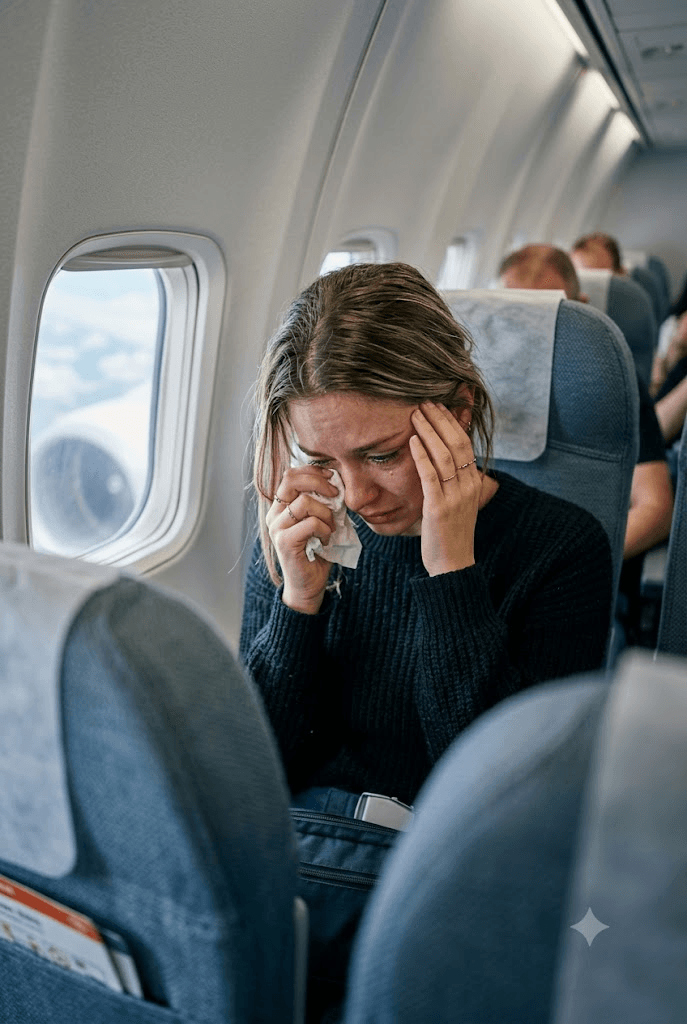
There’s a particular kind of homesickness that doesn’t announce itself loudly. It seeps in quietly — through a vague restlessness, through dreams you can’t quite explain, through an ache that doesn’t have an obvious source. For those who have moved far from where they grew up — whether across the country or across an ocean — the question of whether to return home is one of the most emotionally complex decisions an adult can face. Sometimes your body knows the answer before your mind does. Here are 6 signals your body is telling you to return to your homeland — even if you’re resisting the idea.
1. Unexplained Physical Symptoms That Appear When You Think of Home
The mind-body connection is powerful and often underestimated. When something emotionally significant is unresolved, your body frequently speaks first. You might notice that thinking about home — your mother’s kitchen, the streets you grew up on, the weather you knew as a child — produces a distinct physical sensation: tightness in your chest, tears that arrive without explanation, or a physical warmth that feels like longing made physical.
These aren’t signs of weakness or irrationality. They’re your body’s way of processing an emotional truth that your rational mind might be suppressing. If your body consistently responds to thoughts of home with strong sensation, pay attention. Something is asking to be heard.
2. Dreams That Keep Bringing You Back
Dreams are one of the brain’s primary mechanisms for processing unfinished emotional business. If you find yourself repeatedly dreaming about your homeland — the people, the landscapes, the specific sensory details of where you grew up — your unconscious mind may be grappling with something your waking self hasn’t fully acknowledged.
Not every dream about home signals a need to return. But when the dreams are frequent, emotionally charged, or leave you with a persistent feeling of longing upon waking, they’re worth sitting with rather than dismissing. What’s being revisited in those dreams? What are you searching for, or finding, that you don’t find in your current life?
3. A Persistent Sense of Not Quite Belonging Anywhere Else
Building a life in a new place takes time, and it’s normal to feel like an outsider during the early years. But there’s a different quality to the sense of not belonging that can persist even after you’ve built a good life elsewhere — when you’ve made friends, established routines, and objectively have much to be grateful for, but still feel like a visitor rather than a resident in your own life.
This isn’t always a sign of failure to integrate. For some people, a deep sense of cultural, familial, or geographic rootedness is essential to their psychological wellbeing — not a preference, but a genuine need. If you’ve never been able to fully shake the feeling that you’re somewhere you don’t quite belong, your body and psyche may be pointing toward what would actually restore that sense of grounding.
4. Heightened Emotional Responses to Reminders of Home
A song from your childhood plays in a shop. A recipe smells like your grandmother’s cooking. You hear an accent from your region and feel an unexpected rush of emotion. These disproportionate emotional responses — to sensory cues that connect you to where you came from — are not nostalgia for its own sake. They’re your nervous system recognising something it misses.
Smell and sound in particular are processed through the limbic system, the brain’s emotional and memory centre, in ways that bypass the rational mind entirely. These reactions are visceral and often involuntary. When they’re consistently strong and accompanied by genuine longing rather than simply pleasant remembrance, they’re worth heeding.
5. Physical Health That Deteriorates or Fails to Thrive
There’s research linking chronic homesickness and displacement to measurable physical health outcomes — compromised immunity, disrupted sleep, increased inflammation markers. For some people, the body genuinely does not thrive in certain environments — whether due to climate, air quality, diet, or the chronic low-grade stress of social isolation.
If you’ve noticed persistent health issues that don’t seem to have a clear medical explanation, and if those issues worsen during periods of particularly acute homesickness or improve significantly when you visit home, this pattern is worth noting. It doesn’t prove that you need to move back — but it’s a piece of data about your body’s relationship to your environment.
Taking care of your physical health during periods of significant life uncertainty is essential. Understanding what happens to your mind and body when you slow down can help you create the conditions to hear what your body is trying to tell you amid the noise of daily life.
6. A Growing Sense of Urgency Around Family and Roots
Life in another place often puts distance between you and the people and places that most fundamentally shaped you. For years, this can feel manageable — you visit, you call, you maintain connection at a distance. But at certain life stages — when parents age, when siblings’ children grow up without you there, when you face your own health challenges or significant life transitions — the cost of that distance can shift from background sadness to foreground urgency.
When you find yourself increasingly preoccupied with what you might be missing, or with the possibility of regret, your body and psyche are processing something real. These feelings deserve honest attention rather than to be suppressed under the weight of practical arguments for staying where you are.
What to Do With These Signals
Recognising these signals doesn’t mean you need to immediately uproot your life. It means giving yourself permission to actually consider the question — honestly, without immediately dismissing it as impractical or romanticised. Some useful steps:
- Take an extended visit home rather than a brief holiday, and pay attention to how your body and mood respond over the course of several weeks. Does the longing ease? Do you feel more like yourself?
- Journal about the specific things you miss — and whether those are things that can be replicated where you are, or whether they’re genuinely tied to place and community.
- Have honest conversations with a therapist or trusted friend who can help you separate genuine need from nostalgia, practical fear from emotional truth.
- Research practically what return would involve — without committing to it. Sometimes removing the unknowns makes the question feel less overwhelming.
This is ultimately a question about what kind of life you want to build and what you most need to feel at home in yourself. For reflection on what truly matters and how to honour it, this guide on rebuilding your life offers a useful framework for navigating major life decisions with honesty and intention.
Frequently Asked Questions
Is it normal to feel torn about whether to return home?
Completely normal. Most people who live far from their homeland hold both genuine love for their adopted home and genuine longing for where they came from. These feelings don’t cancel each other out — they coexist, and the tension between them is a sign of how deeply invested you are in both places, not a sign that something is wrong with you.
What if returning isn’t practically possible?
When return isn’t currently feasible — due to immigration status, financial realities, career commitments, or family structure — the goal shifts toward finding ways to maintain connection with home from a distance and building deeper community where you are. Regular video calls with family, connecting with others from your homeland in your current city, cooking familiar foods, and participating in cultural traditions all help bridge the gap. It won’t replicate being there, but it can meaningfully reduce the sense of disconnection.
How do I know if it’s homesickness or depression?
Homesickness and depression can look similar and sometimes coexist. Key differences: homesickness tends to be focused on a specific missing — particular people, places, and experiences — and typically eases when you’re actually at home or in contact with home. Depression tends to be more pervasive, affecting your ability to find pleasure in things regardless of context. If you’re unsure, speaking with a doctor or mental health professional is the most reliable way to distinguish between the two and get appropriate support.
Sources & further reading: Psychology Today: Identity and Belonging | APA: Cultural Identity and Mental Health | WHO: Mental Health and Wellbeing.

Cassandra Simpson is a wellbeing and relationship writer with a BSc in Psychology and five years of experience working in community mental health support. She writes about love, friendship, boundaries, and the emotional work of belonging — drawing on both academic grounding and the hard-won perspective that comes from navigating her own relationship patterns, friendships, and personal growth in real time. Cassandra trained as a peer support facilitator and has spent years exploring attachment theory, interpersonal dynamics, and the psychology of connection. Her writing is shaped by a deep belief that most relationship struggles come not from failure, but from the absence of honest, accessible information about how human connection actually works.