I grew up in a family where strength was the currency. You didn’t cry at the kitchen table. You didn’t ring your friends in a panic. You got on with it. And to this day there is a version of me — she surfaces at the worst possible moments — who would rather dissolve quietly into the floor than tell someone I’m struggling.
I’ve spent years trying to understand where this pattern came from, and more years trying to do something useful with the understanding. What I’ve learned — through therapy, through being properly loved by people who didn’t require me to be strong, through finally reading the research — is that the silence isn’t strength. It’s a kind of poverty. And it costs us, quietly, in ways we rarely fully see.
Why Women Struggle to Ask for Help
The reasons are structural as much as personal. Across cultures, women are socialised to prioritise the needs of others — to be the helper, the carer, the one who holds things together. In this framework, needing help is not a neutral act. It’s a deviation from the expected role, and it carries the risk of being seen as weak, incapable, or burdensome. Research by Dr. Brené Brown at the University of Houston found that shame — the fear of being seen as not enough — is one of the primary inhibitors of help-seeking, and that women experience shame most acutely around vulnerability and perceived failure in caring roles.
There’s also a practical dimension. Women who take on disproportionate amounts of emotional and domestic labour have often developed a genuine competence in managing things solo — which can make asking for help feel not just uncomfortable but unnecessary, even when the weight is unsustainable. “I can handle it” is sometimes literally true and simultaneously deeply costly.
The Cost of the Strong Woman Myth
The “strong Black woman” stereotype, explored extensively in research by Dr. Cheryl Woods-Giscombé at the University of North Carolina, illustrates in particularly stark form the cost of strength narratives. Her research on the “Superwoman Schema” documented how Black women, in response to both racism and the stereotype of superhuman resilience, often suppress emotional needs, resist showing vulnerability, and avoid seeking help — with significant consequences for mental and physical health. While the specific pressures of this experience are unique, the underlying dynamic — expectations of strength that make help-seeking feel like failure — resonates across many women’s experiences.
The cost of not asking for help is not just personal suffering. It’s the perpetuation of a model of womanhood that demands silent sacrifice, and the implicit message — to daughters, to younger women watching — that this is what being a woman requires. Every woman who admits she’s struggling, who asks for what she needs, who allows someone else to carry something for her, is not just helping herself. She’s expanding the permission structure for everyone watching.
What Makes It So Hard in Practice
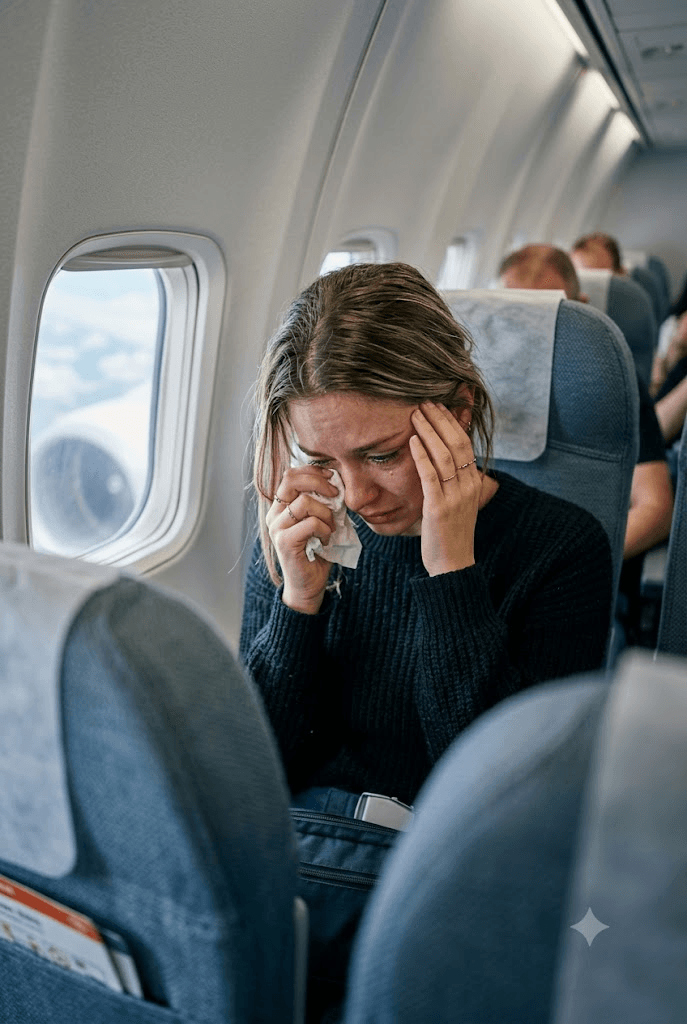
Even when you intellectually understand that asking for help is okay — even when you’ve had the therapy and read the books — there’s a gap between knowing and doing that can feel enormous in the moment. The words dry up. You reach for your phone to message someone and then put it back in your pocket. You say “I’m fine, thanks” to the person asking how you are, and then hate yourself a little for it.
This is partly physiological. The stress response that accompanies vulnerability — the elevated heart rate, the chest tightness, the sense of danger — is processed by the same system that processes physical threat. Your body doesn’t know the difference between vulnerability and actual danger. Which is why it takes active practice — not just intellectual permission — to do it differently.
How to Start Asking for Help
Start smaller than you think you need to. The first act of help-seeking doesn’t need to be a revelation at your kitchen table. It can be telling someone “I’ve been having a hard week” and actually meaning it. Accepting the offer of help that you’d normally decline. Telling a trusted friend one specific thing that’s difficult, rather than giving the usual competent overview. These small, repeated acts of choosing honesty over performance are how the capacity is built. Research by Dr. James Pennebaker at the University of Texas has found that even the act of writing about difficult experiences — expressing them in language rather than suppressing them — reduces both psychological and physiological stress markers significantly. Expression is, in itself, a form of help-seeking, even when the audience is only yourself.
Understanding why women struggle to advocate for themselves can help you identify the specific patterns that keep you silent — because the pattern that holds you back from asking for help is often the same one that keeps you from asking for the raise, the support, or the space you need. And these practical approaches to standing up for yourself, validated by a wellness coach, can give you concrete language and strategies for doing it differently.
At the root of all of this is something that deserves to be said clearly: you are not required to carry everything alone in order to be worthy of love and respect. Your needs are not a burden. Your struggles are not failures. And asking for what you need is not weakness — it is one of the most courageous and countercultural things a woman in our world can do. If you’re working on building the self-belief that makes this possible, this piece on embracing your true self-worth is a good place to start.
Frequently Asked Questions
Is finding it hard to ask for help a sign of a mental health issue?
Not necessarily. Difficulty asking for help is extremely common, particularly among women, and can be primarily a socialised pattern rather than a clinical one. That said, if it’s part of a broader pattern that includes persistent low mood, anxiety, isolation, or significant functional impairment, it may be worth speaking to a GP or mental health professional. If seeking help from a professional feels like part of the barrier — “I shouldn’t need therapy for this” — that resistance is itself worth examining with some compassion.
What do I do if people don’t respond well when I do ask for help?
This happens, and it’s important not to let a single bad response close the door permanently. People who aren’t used to you being vulnerable may respond awkwardly — not because your vulnerability is wrong, but because they don’t know what to do with it. Give it another chance, with the same person if the relationship is important to you, or with someone else. Over time, asking for help also teaches the people around you how to show up for you — it creates an opportunity for the relationship to deepen in ways it couldn’t while you were always performing competence.
How do I distinguish between genuine need for help and anxiety-driven help-seeking?
Genuine need tends to feel like a gap: there’s something I can’t do alone, or something that would be significantly better with support. Anxiety-driven help-seeking tends to feel more like reassurance-seeking — looking for someone to confirm that you’re okay, that the decision you’ve made is right, that everything will work out. The former enriches your life and distributes a genuine load. The latter can create patterns of dependency that actually increase anxiety over time by undermining your trust in your own judgment. If you’re uncertain which applies, a therapist can help you distinguish between them.
Further Reading & Sources

Rubie Le’Faine is the founder of Rubie Rubie and a writer specialising in emotional well-being, self-identity, and the psychology of modern relationships. She holds a Level 3 Certificate in Counselling Skills and has spent over eight years studying attachment theory, cognitive behavioural principles, and human development — first through formal study, then through lived experience that no course can replicate. After navigating a significant relationship breakdown, an identity rebuild, and the complex terrain of rediscovering herself in her 30s, Rubie began writing to make sense of what she had learned and to offer honest, human guidance to others going through the same. She founded Rubie Rubie in 2022 as a space for women seeking real answers, not platitudes. Based in Surrey, UK, her writing is grounded in research, shaped by experience, and centred entirely on the reader’s genuine wellbeing.