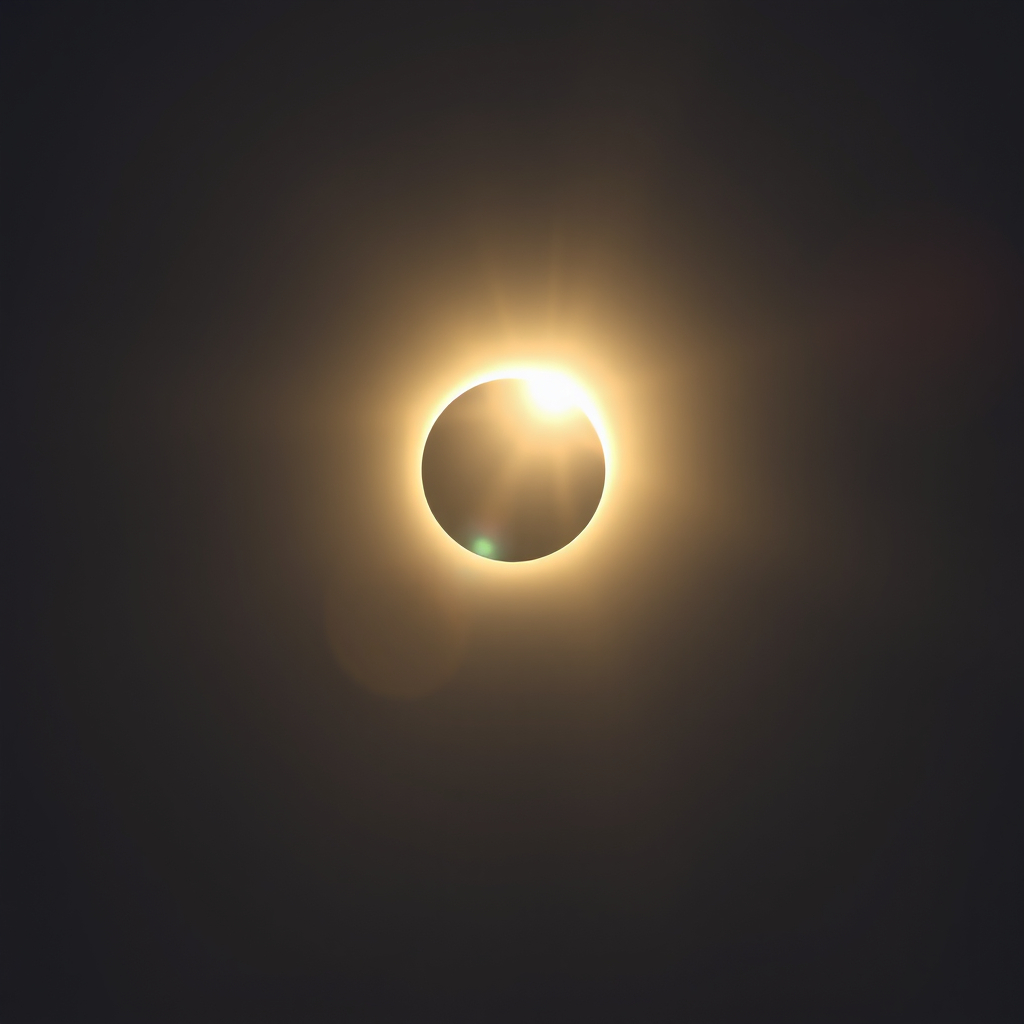
A solar eclipse is one of the most arresting events nature offers — a moment when the moon passes between the earth and the sun, briefly plunging a path of the world into shadow. The 2025 solar eclipse captured imaginations across continents, drawing people outside, gathering them in parks and open fields, and prompting a kind of collective stillness that modern life rarely affords. Beyond the spectacle, a solar eclipse invites something deeper: a reflection on the maps that guide us — not just the celestial charts that predict the eclipse’s path, but the internal maps we use to navigate our own lives.
What Is a Solar Eclipse and Why Does It Matter?
A total solar eclipse occurs when the moon completely covers the disc of the sun as seen from a specific narrow band on Earth — the path of totality. Within this path, day becomes a dramatic twilight for several minutes, stars become visible, temperatures drop, and animals behave as if night has suddenly fallen. Outside the path of totality, observers see a partial eclipse — the sun partially obscured, like a bite taken from a luminous disc.
What makes solar eclipses so powerful as human experiences is their combination of predictability and rarity. We know precisely when and where they will occur centuries in advance — the mathematics of celestial mechanics is that reliable. Yet the full experience of totality is available only to those in a narrow geographic strip, and only for a matter of minutes. This combination of cosmic order and fleeting access is part of what makes them so moving.
The 2025 Solar Eclipse: Path and Details
The 2025 solar eclipse offered a stunning path of totality across specific regions, drawing eclipse chasers — a passionate community of travellers who follow total eclipses around the globe — as well as millions of first-time viewers. Preparations included everything from specially designed viewing glasses to elaborate community gatherings, public education events, and remarkable scientific observation programmes.
What struck many observers was not just the spectacle itself, but the shared nature of the experience. Standing alongside strangers in the path of totality — all looking upward together, all briefly held in the same moment of awe — reminded people of the fundamental human impulse to share wonder. These collective moments of stillness and connection are increasingly rare in a fragmented, screen-saturated world.
Maps That Guide Us: A Metaphor Worth Exploring
Eclipses are tracked using extraordinarily precise maps: paths drawn across continents showing exactly where the shadow will fall, down to the kilometre. Thinking about these maps naturally invites reflection on the internal maps we use to navigate our lives.
Every person carries an internal map — a set of beliefs, assumptions, values, and mental models that determines how they interpret events, make decisions, and move through the world. Unlike eclipse maps, our internal maps are rarely made explicit. They form through childhood experience, cultural conditioning, relational patterns, and stories we have inherited rather than chosen. And like any map, they are not the territory — they are a representation of it, always incomplete, sometimes distorted, and frequently out of date.
The question a solar eclipse invites is this: where have you been using an outdated map? Where is the territory of your life genuinely different from the model you are navigating by? These are among the most valuable questions we can ask. Exploring your internal landscape is deeply connected to embracing your true self-worth — which requires seeing yourself clearly, not through the distorted lens of old stories.
What Eclipses Teach Us About Darkness
Across virtually every culture and throughout history, solar eclipses have been interpreted through the lens of available belief systems — as omens, as divine messages, as temporary intrusions of darkness into the order of things. In modern understanding, we know the eclipse is a perfectly natural celestial event. But the emotional experience of totality — of genuine darkness falling in the middle of the day — still carries symbolic weight.
Darkness, in the metaphorical sense, is an inevitable part of any human life. Grief, failure, illness, loss, disorientation — these are the eclipses of the inner world. And like a solar eclipse, they are temporary. They have a path. They have a predictable end. The darkness is real, and so is what comes after it. Understanding this can be profoundly consoling when you are in the middle of your own dark phase. Exploring why it takes darkness to find the light at the end of the tunnel offers a psychological perspective on this universal experience.
The Science of Awe and Why We Need More of It
Psychologists who study the emotion of awe — that combination of vastness, beauty, and something beyond ordinary understanding — have found that it has remarkable effects on human wellbeing. Awe reduces self-focused thinking, increases prosocial behaviour, creates a felt sense of connection to something larger than oneself, and even appears to reduce markers of inflammation in the body.
Solar eclipses are one of the most reliable triggers of genuine awe available to us. The experience of the moon covering the sun — of standing in the physical shadow of a celestial body — is visceral in a way that photographs and descriptions cannot capture. It puts human scale in dramatic perspective. For a few minutes, your concerns about work, relationships, and daily life recede, replaced by something far older and more fundamental.
In a world where many people report feeling chronically disconnected from meaning and from nature, experiences like a solar eclipse offer a direct path back. They remind us that we are inhabitants of a universe that operates by reliable, beautiful laws — and that there is something deeply comforting about that, even if we cannot fully articulate why. This kind of perspective shift connects to understanding what happens when you finally slow down — both physically and mentally.
How to Prepare for Future Eclipses
If you missed the 2025 eclipse, future total solar eclipses are predictable well in advance. The key preparation is simple: identify whether you are in the path of totality or only in the partial eclipse zone. The experience of totality is categorically different from a partial eclipse — it is worth travelling to be in the path if at all possible. Obtain certified eclipse glasses well in advance. Find a viewing location with an unobstructed western horizon. And perhaps most importantly, allow yourself to simply be present when it happens. No photograph captures totality as well as the direct, unmediated experience.
Frequently Asked Questions
Is it safe to look at a solar eclipse without glasses?
You must never look directly at the sun during a partial eclipse without certified ISO 12312-2 eclipse glasses or a solar viewer. Regular sunglasses are completely insufficient and provide no protection against solar retinopathy — damage to the retina caused by solar radiation. The only safe naked-eye viewing during a solar eclipse is during the brief period of total totality, when the sun’s disc is completely covered. The moment the sun begins to reappear, protective eyewear must go back on immediately.
What is the difference between a total and annular solar eclipse?
In a total solar eclipse, the moon is close enough in its orbit to completely cover the sun’s disc, producing totality. In an annular solar eclipse, the moon is at a point in its elliptical orbit where it appears slightly smaller than the sun, leaving a visible ring — or annulus — of sunlight around the dark moon. Annular eclipses are visually striking but do not produce the dramatic totality experience; the sky remains relatively bright throughout.
Why do animals behave strangely during a total solar eclipse?
Animals largely interpret their environment through light cues. When totality plunges an area into near-complete darkness in the middle of the day, their circadian systems receive a powerful and confusing nightfall signal. Birds may return to roosts. Insects may begin their evening chorus. Nocturnal animals may briefly emerge. Farm animals sometimes head back to their shelters. The behaviour returns to normal within minutes of totality ending, but it is a vivid reminder of how deeply embedded light is in the biological rhythms of nearly all life on Earth.
Further Reading & Sources

Cassandra Simpson is a wellbeing and relationship writer with a BSc in Psychology and five years of experience working in community mental health support. She writes about love, friendship, boundaries, and the emotional work of belonging — drawing on both academic grounding and the hard-won perspective that comes from navigating her own relationship patterns, friendships, and personal growth in real time. Cassandra trained as a peer support facilitator and has spent years exploring attachment theory, interpersonal dynamics, and the psychology of connection. Her writing is shaped by a deep belief that most relationship struggles come not from failure, but from the absence of honest, accessible information about how human connection actually works.