When you start listening to the podcasts, watching the documentaries, or reading the deep dives into microplastics, a strange thing happens. Suddenly, your kitchen feels like a minefield. You look at your kettle, your gym leggings, and your leftover containers with a new sense of dread. The weight of the “plastic crisis” can feel suffocating, making every daily choice feel like a life-or-death decision for the planet.
Firstly, take a breath. Being educated is a superpower, but it shouldn’t be a source of constant anxiety. You have the power to pivot whenever you are ready. Secondly, let’s address the elephant in the room: plastic is affordable. In a world where the cost of living is soaring, “plastic-free” often feels like a luxury for the rich.
This is a soft guide. It is okay to take your time. You don’t need to replace everything today. Here are 7 ways to reduce plastic in the household at your own pace, backed by data that explains the “why” without the “guilt.”
1. Swap Your Toothbrush (The Low-Hanging Fruit)
Every plastic toothbrush ever made still exists somewhere on this planet. Because they are made of a mix of plastic, rubber, and nylon, they aren’t recyclable. Switching to a bamboo handle is one of the easiest ways to reduce plastic in the household.
- The Data: According to National Geographic, 1 billion plastic toothbrushes are thrown away every year in the US alone.
- The Pivot: When your current brush frays, buy a bamboo one. It’s a small, $5 investment that prevents a lifetime of plastic waste.
2. Evaluate Your Cooking Utensils
When plastic spatulas or slotted spoons are heated, they can release chemicals and microplastics directly into your food. This is especially true for black nylon utensils, which are often made from recycled electronic waste containing flame retardants.
- The Research: A study published in the journal Environment International suggests that heat significantly increases the migration of chemicals from plastic into food.
- The Pivot: Don’t throw them all away now! As they melt or scratch, replace them one by one with stainless steel or FSC-certified wood.
3. The Final Water Bottle Transition
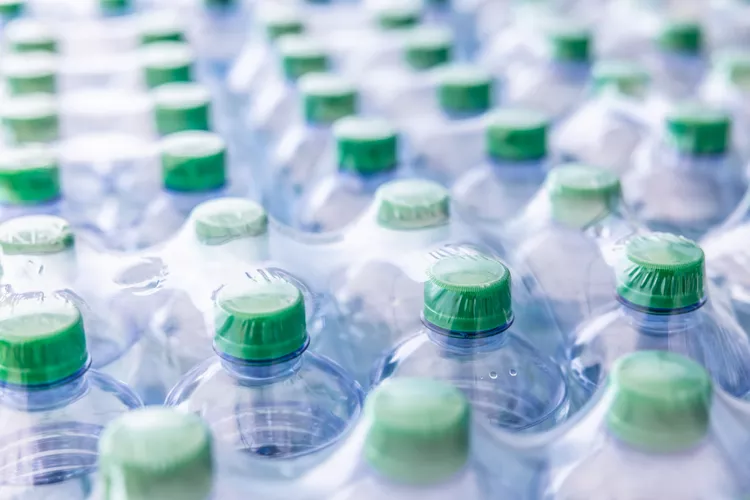
By now, we all know the drill with reusable bottles. However, the focus has shifted from “saving the ocean” to “saving your blood.” New research is showing just how many nanoplastics we ingest from bottled water.
- The Data: Research from Columbia University found that a single liter of bottled water contains an average of 240,000 detectable plastic fragments.
- The Pivot: If you can’t afford an expensive filter, a simple glass jar or a stainless steel bottle is a one-time purchase that keeps those fragments out of your system.
4. Reading the Clothes Label
This is the one that surprises people. Most of our modern “soft” clothes (leggings, fleeces, stretchy jeans) are actually made of plastic (polyester, acrylic, nylon). Every time you wash them, thousands of microfibers enter the water system.
- The Research: The International Union for Conservation of Nature (IUCN) estimates that 35% of all microplastics in the ocean come from the laundry of synthetic textiles.
- The Pivot: You don’t need a new wardrobe. Just start checking labels for cotton, linen, or hemp. When buying new, aim for “natural fibers” to slowly shift your home’s plastic footprint.
5. Conscious Bed Linens
We spend a third of our lives in bed, breathing in the air around our pillows. If your sheets are “microfiber,” you are essentially wrapped in plastic. Synthetic sheets don’t breathe, which can lead to poorer sleep quality and higher body temperatures.
- The Data: A study by The Plastic Soup Foundation highlights that indoor air often has higher concentrations of microplastics than outdoor air, largely due to synthetic home textiles.
- The Pivot: Wait for a white sale and invest in one good set of 100% cotton or bamboo sheets. Your skin and your lungs will thank you.
6. Food Packaging and Storage
The “overwhelm” usually hits hardest in the pantry. Almost everything is wrapped in film. While you can’t control how the supermarket packs pasta, you can control how you store it at home.
- The Research: The Endocrine Society has linked phthalates (found in flexible plastics) to hormonal disruptions.
- The Pivot: Instead of buying expensive matching glass sets, wash out your old jam or pasta sauce jars. They are free, plastic-free, and look beautiful on a shelf.
7. Candles and Fragrances
Many “affordable” candles are made from paraffin wax, which is a petroleum byproduct (essentially liquid plastic). When burned, they can release volatile organic compounds (VOCs) into your living space.
- The Data: The EPA notes that some scented candles can be a source of indoor air pollution.
- The Pivot: Look for soy, beeswax, or coconut wax candles with essential oils. Or, simply open a window—fresh air is the ultimate plastic-free fragrance.
You are doing a great job. Change is a marathon, not a sprint. Every jar reused and every label read is a win for your health and our home. Take your time—you’re worth the wait.
Love Arlyn xoxo