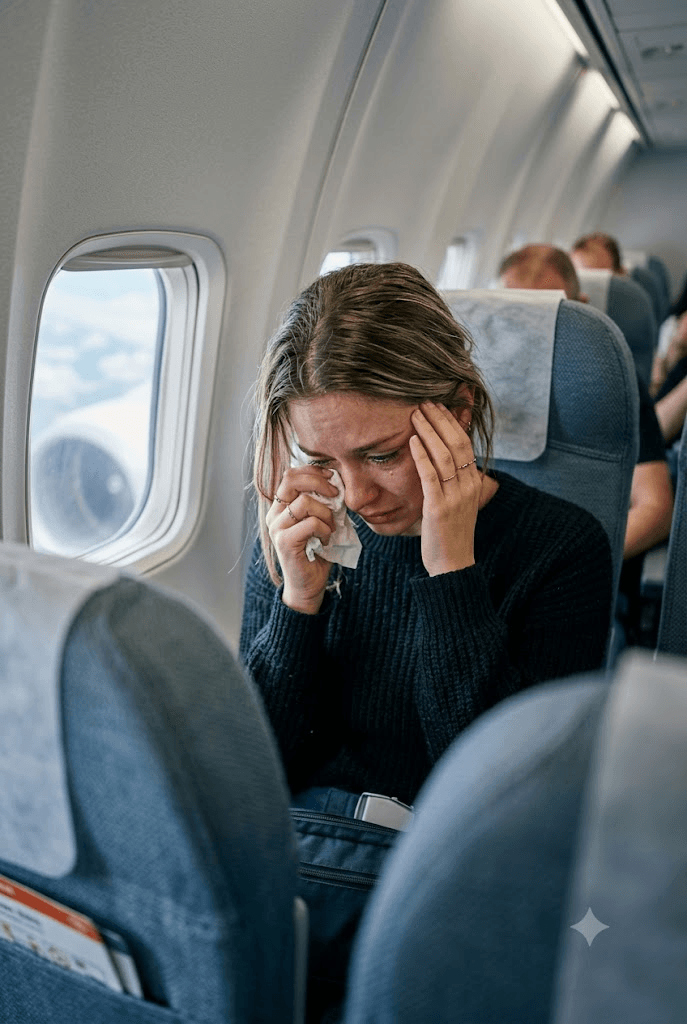
For a long time, I thought anxiety was just my personality. The constant low-level hum of worry. The replaying of conversations. The future-projecting that turned every ordinary Tuesday into a quiet rehearsal for disaster. I had tried therapy, which helped. I had tried exercise, which helped too. But there was still this underlying restlessness — this sense that I was always slightly out of sync with my own life.
What changed things for me, gradually and unexpectedly, was the combination of a regular mindfulness practice with what I can only describe as a more deliberate spiritual orientation — a conscious effort to connect with something beyond my immediate, anxiety-producing thoughts. I am not talking about religion, though for many people that is the path. I mean the experience of being part of something larger than my own inner monologue.
Why Mindfulness Alone Was Not Enough
Mindfulness practice — specifically the attention-training, present-moment awareness version widely studied in clinical settings — is extraordinarily well-evidenced. Research published in JAMA Internal Medicine shows it consistently reduces symptoms of anxiety and depression to a degree comparable with medication. I benefited from it. But something about practising presence purely as a stress management technique felt incomplete to me. It calmed the surface without addressing the deeper question: what am I doing here, and does it mean anything?
The Layer That Spirituality Adds
Spirituality, in the broadest sense, is about meaning-making — the human capacity to find significance, purpose, and connection in life beyond our immediate material circumstances. Research by Pargament and colleagues in the psychology of religion consistently shows that people with a sense of spiritual connection — regardless of whether that connection is religious, nature-based, community-based, or purely philosophical — demonstrate significantly greater psychological resilience, particularly in the face of adversity and loss.
When you layer spiritual meaning-making on top of mindfulness practice, something shifts. You are not just learning to observe your thoughts without reacting. You are orienting those thoughts and that presence towards something that gives your life weight and direction. That combination is, for many people, more than the sum of its parts.
What This Looked Like in Practice
For me, it started with spending ten minutes outside every morning before my day began — not exercising, not thinking about tasks, just being present in whatever the weather was doing and consciously noticing that I was part of something I did not fully understand or control. That sounds small. It was transformative. The awareness that I am a tiny, temporary creature in an enormous and extraordinary universe stopped feeling like an anxiety-inducing thought and started feeling like a relief.
I also started journaling with a specific focus: not processing my immediate worries, but exploring questions of meaning. What kind of person am I trying to be? What genuinely matters to me, not just what I think should matter? Where am I living in alignment with my values, and where am I compromising them? These questions, engaged with honestly and regularly, produce a kind of interior clarity that mindfulness alone, for me, did not.
The Research on Combined Practices
A growing body of research explores the interaction between mindfulness and spirituality. Studies from Frontiers in Psychology suggest that for many people, spiritual engagement enhances the benefits of mindfulness practice by providing a motivational framework — a “why” that sustains the practice through the inevitable periods when it feels unremarkable or effortful. Conversely, mindfulness practice tends to deepen spiritual experience by clearing the mental clutter that otherwise prevents genuine contemplation.
Finding Your Own Version
Your combination will look different from mine. It might involve a formal religious practice. It might be rooted in time in nature, in creative practice, in community service, or in a philosophical framework you find personally compelling. The through-line is the same: presence plus meaning. Learning to be here fully, and finding enough reasons to care about being here at all. Those two things together changed something fundamental about how I experience ordinary days. I hope they do for you too.
Related reading: 5 Ancient Wisdom Practices That Science Has Proven Work, The Healing Power of Journaling, The Anti-Burnout Guide: How to Protect Your Energy.

Arlyn Parker is a wellness and mindfulness writer with a background in holistic health coaching. She completed her practitioner training in mindfulness-based stress reduction (MBSR) and holds a certification in positive psychology from an accredited UK provider. Over six years of working with clients navigating anxiety, burnout, and major life transitions gave Arlyn a front-row seat to what actually helps people create sustainable calm — and what doesn’t. Her own experience with burnout in her late 20s, and the slow, deliberate process of rebuilding her health and habits, is the foundation of everything she writes. Arlyn’s work is not about aspirational wellness — it’s about practical, evidence-informed strategies for people living real, complicated lives.