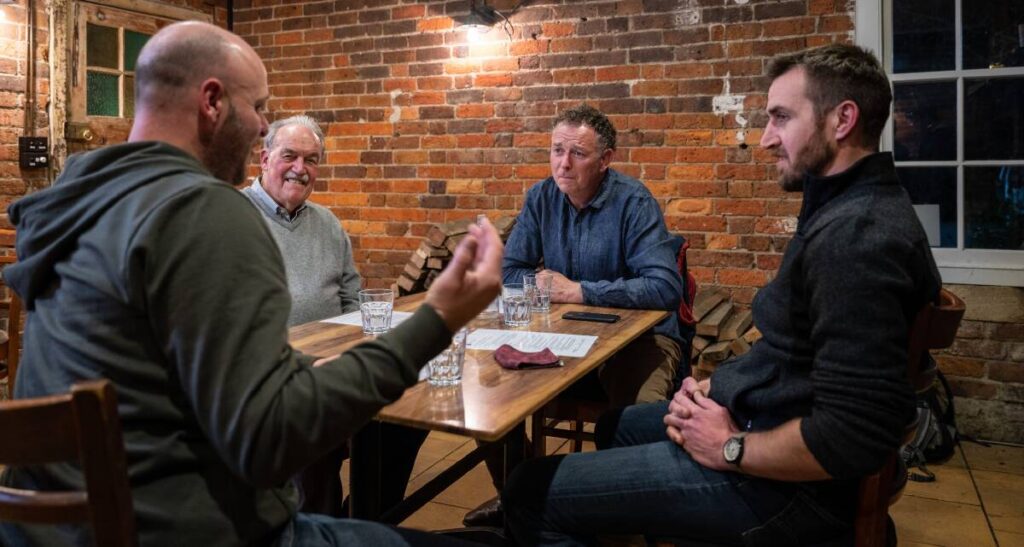
Some of the most transformative ideas in history did not emerge from solitary genius — they emerged from small groups of committed people who created the conditions for collective thinking to thrive. The coffeehouse intellectual culture of 18th-century London, the Bloomsbury Group, the PayPal mafia, the Homebrew Computer Club — all were, in their own way, idea pods: deliberately assembled environments where intellectual collision, creative challenge, and mutual accountability produced outcomes none of the individual members could have achieved alone.
An idea pod is a small group — typically four to eight people — brought together with the explicit purpose of generating, developing, and testing ideas. Here are eight hard-won lessons about what makes them work.
1. Size Is Foundational
The optimal idea pod is small enough for everyone to speak freely in every session and large enough to generate genuine diversity of perspective. Four to eight people is the sweet spot most practitioners arrive at. Below four, the group lacks sufficient creative tension — you tend to converge too quickly. Above eight, social dynamics begin to inhibit authentic contribution: quieter members self-censor, louder ones dominate, and the session becomes more meeting than creative crucible.
Resist the temptation to include everyone who is interested or who might feel left out. The integrity of the group size matters more than inclusivity at the founding stage. You can always create additional pods for others who want to participate.
2. Diversity of Perspective Beats Diversity of Agreement
The most powerful idea pods contain people who think genuinely differently — not just people from different departments or demographics, but people with fundamentally different cognitive approaches, knowledge bases, and assumptions. A financial analyst, a visual artist, a systems engineer, and a social worker will generate ideas that none of them would have reached independently. A group of four marketing professionals will generate polished marketing ideas.
The discomfort of genuine cognitive diversity is the point. When people think differently, conversations require more effort and produce more friction. That friction is where the interesting ideas tend to live. Curate for genuine difference, not just the appearance of it.
3. Psychological Safety Is Non-Negotiable
Google’s Project Aristotle — the most comprehensive study of what makes teams effective — identified psychological safety as the single most important factor above all others. In the context of an idea pod, psychological safety means that every member genuinely believes that expressing an underdeveloped idea, challenging a popular view, or admitting uncertainty will not result in judgment, ridicule, or exclusion.
Establishing this safety requires explicit agreement, modelled behaviour from whoever convenes the group, and consistent enforcement of norms that protect it. One or two incidents where a member is mocked, shut down, or dismissed are enough to silence the most creative contributors permanently. Building the kind of authentic connection that makes this safety possible is also part of what makes personal relationships thrive — as explored in the power of vulnerability and authentic connection.
4. Structure Enables Creativity — Not Constrains It
The paradox of creative group work is that complete freedom tends to produce less, not more. Without structure, conversations drift, dominant voices fill the silence, and the group gravitates toward comfortable rather than challenging territory. A well-designed session structure — a clear opening question or challenge, defined time blocks for different types of thinking, explicit transitions between modes (generative, evaluative, synthesising) — creates the container within which genuine creativity can safely happen.
Consider designating a rotating facilitator role rather than always having the same person lead. The facilitator is responsible for the process, not for contributing ideas — a discipline that often produces better sessions than when the most senior or most vocal person is simultaneously trying to lead and generate.
5. Separate Idea Generation from Idea Evaluation
One of the most reliably destructive patterns in group thinking is evaluating ideas at the same time as generating them. When members know their ideas will be immediately assessed, the fear of negative evaluation suppresses contribution — particularly from those who are less confident or more cautious. The quality of ideas drops precipitously when the evaluative voice is active during generative phases.
Structured separation — a generative phase where all ideas are welcomed and recorded without evaluation, followed by a distinct evaluative phase where the ideas are assessed — consistently produces more ideas and more interesting ideas than mixed-mode sessions. This principle, rooted in the original brainstorming research of Alex Osborn, remains robust despite the evolution of brainstorming criticism in other areas.
6. Accountability Between Sessions Is What Separates Good Pods From Great Ones
An idea pod that meets, generates exciting ideas, and then disperses until the next meeting is intellectually interesting but not generative of change. The groups that produce real outcomes — new projects, new approaches, genuine creative work — build accountability into the structure between sessions. Each member commits to one small action in the period between meetings and reports back at the start of the next session.
This accountability loop does several things simultaneously: it tests whether ideas have real-world viability, it builds the habit of translating conversation into action, and it creates a gentle social consequence for non-delivery that motivates follow-through. The specificity of the commitment matters — “I will try something” produces very different results from “I will contact three people by Thursday.”
7. The Pod Needs to Evolve — or End
Groups, like relationships, have natural lifecycles. An idea pod that was genuinely alive and productive in its first year may become comfortable and repetitive in its third — not because the people have changed, but because the implicit norms, conversational patterns, and relational dynamics have calcified. The best idea pods anticipate this and build in mechanisms for renewal: periodic membership reviews, rotating formats, explicit conversations about the group’s current purpose and whether it still serves.
The willingness to end a pod that has run its course — rather than continuing out of loyalty or inertia — is itself a mark of the group’s intellectual integrity. Some pods are time-limited by design. Others evolve naturally into something different. Both outcomes are legitimate.
8. The Quality of Questions Determines the Quality of Outcomes
In any idea-generation context, the quality of the central question determines the quality of the thinking it produces. “How do we increase sales?” produces different thinking from “What would need to be true for our customers to love us so much they become our sales team?” The first is incremental. The second is generative. Learning to craft genuinely generative questions — open, forward-looking, specific enough to direct thinking but broad enough to invite unexpected answers — is one of the most valuable skills any idea pod convener can develop.
A useful test for a question’s quality: if the obvious, conventional answer satisfies it, it is probably not generative enough. A good question makes the first answer feel inadequate — which is exactly the discomfort that produces novel thinking. This kind of intellectual challenge and growth connects to the broader confidence and communication skills explored in why confidence and communication define success in the modern era.
Frequently Asked Questions
How often should an idea pod meet?
Monthly is the most common rhythm for pods that sustain momentum without creating attendance fatigue. Fortnightly can work well when accountability loops are short and members are actively working on shared projects. Weekly is typically too frequent for most busy professionals to maintain the preparation and reflective thinking that makes sessions valuable. The key is consistency — a regular, predictable cadence that members can plan around matters more than the specific frequency.
Can idea pods work virtually?
Yes, though with some adaptation. Virtual pods tend to benefit from slightly shorter sessions (60–75 minutes versus 90–120 minutes in person) due to video fatigue. Breakout rooms for parallel small-group thinking can replicate the side conversations that happen naturally in physical spaces. Shared digital whiteboards (Miro, FigJam) help capture and organise ideas in real time. The psychological safety work is, if anything, more important in virtual contexts where social cues are reduced and the temptation to multitask is higher.
How do I start an idea pod if I have no existing network to draw from?
Begin by identifying two or three people whose thinking you genuinely admire and who are outside your immediate professional circle. Invite them to a single experimental session framed around a specific, compelling question — not “let’s form a group” but “I am working on this problem and I think your perspective would be genuinely valuable for 90 minutes.” If the session produces something interesting, the group often forms itself organically from there.
Sources & further reading: Harvard Business Review: Creative Problem Solving | APA: Creativity and Innovation | Psychology Today: Group Creativity.

Jack Rylie is a writer and mental health advocate who has spent the past decade exploring resilience, identity, and emotional rebuilding — both as a writer and as someone who has navigated significant personal upheaval. After a career change in his early 30s that coincided with the end of a long-term relationship, Jack spent two years in psychotherapy and became deeply interested in how men process loss, change, and vulnerability in a culture that rarely creates space for it. He holds a Post-Graduate Certificate in Psychology of Mental Health and has contributed to mental health awareness campaigns with several UK-based organisations. His writing draws on clinical research, personal experience, and a long-held belief that honest male vulnerability is not a weakness — it is the foundation of genuine resilience.